

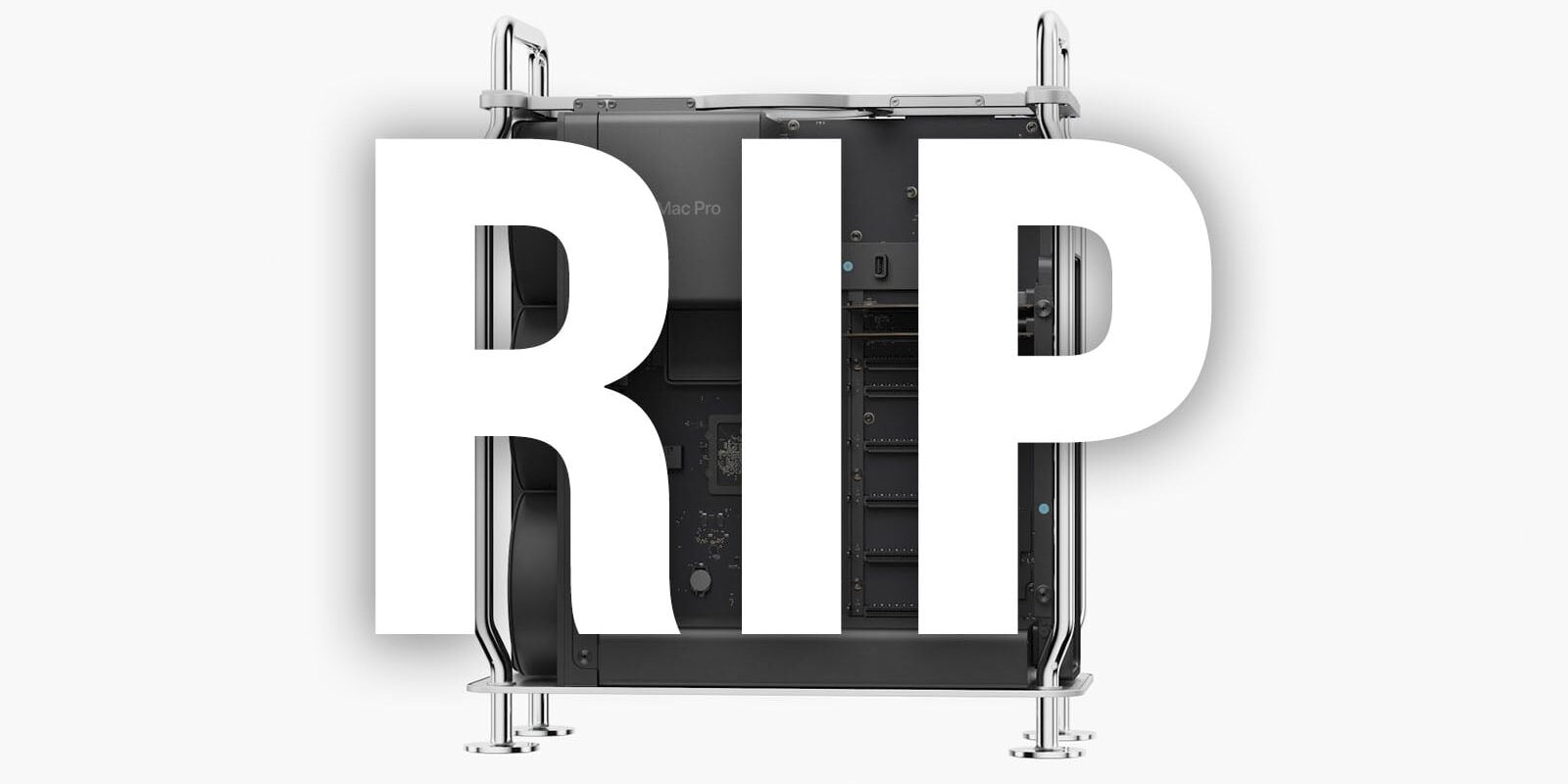
The tech giant, Apple Inc., has arguably left a segment of its loyal customer base in shock and nostalgia, as it pulls the curtains on the Mac Pro, marking the end of an era in high-end desktop computing.
Popularly dubbed the “cheese grater” due to its unmistakable design, the Mac Pro ventured into the market in 2006. It captivated the professional creative world with its raw power and the flexibility to customize internal components, which had been a defining feature of desktop computers for decades.
Apple has not officially released an announcement regarding the discontinuation of the Mac Pro. However, signs point to this likely end as notable tech outlets and forums like MacRumors and Redditors report the disappearance of the Mac Pro lineup from Apple’s official website. The absence of any new model updates since 2019 further bolsters the argument of the Mac Pro’s demise.
Industry commentators have suggested that the move likely signals Apple’s increasing shift towards sleek, self-contained devices. The era of switchable parts and DIY upgrades is gradually fading as the MacBook Air, iPad, and the compact Mac Mini take the limelight.
Though some faithful Mac Pro lovers might see this as the end of an era, the practicality of this shift cannot be understated. Tech analyst Ben Bajarin notes, “The percentage of Mac users that need to upgrade or replace parts is incredibly small. Apple has made a strategy calculated on that, and the market seems to have responded well.”
The Mac Pro saw its last significant innovation in 2019 with its monstrous specs but at a starting price point of $5,999, it seemed only a viable option for the most professional of users, far beyond the average customer’s needs or budget.
Moreover, with the introduction of Apple’s proprietary M1 Silicon chips in 2020, the company began to assert independent control over its hardware, minimizing reliance on third-party suppliers like Intel. The Mac Pro’s concept of customizability was in direct contrast with the new direction Apple was heading.
This departure from customizable machines can be seen as a part of Apple’s larger initiative to package powerful, efficient computing power in compact, streamlined designs such as the new M1-powered MacBook Air and MacBook Pro laptops.
However, this shift doesn’t come without drawbacks. The most notable concern among professionals is the inability to upgrade components, reducing the longevity of the device in a fast-paced tech world. While the company’s M1 chips have garnered exceptional reviews for their performance, the lack of an upgrade path leaves professionals skeptical about the long-term use of these machines.
“The upgradeability was one of the main selling points of the Mac Pro,” notes Jamie Ryan, a technical director at a film production company. “While M1 machines might be perfect for most users, for professionals needing a lot of power and storage, the Mac Pro was the way to go.”
As Apple moves forward, users will have to rely on the company’s judgments about what specs are necessary. As of now, Apple has yet to comment on the long-term implications of this move on its professional users, a silence that not only builds suspense but also apprehension.
While the Mac Pro’s demise represents a significant shift in Apple’s tech philosophy, it could also be seen as a testament to the company’s faith in their revolutionary M1 chips. As we bid farewell to the Mac Pro, it paints a vivid picture of Apple’s forward-thinking approach, prioritizing innovation and evolution over mere reparability. That’s Apple’s gamble. Whether it pays off or not, only time will tell.
Original Source: https://petapixel.com/2026/03/26/the-apple-mac-pro-is-dead/


