

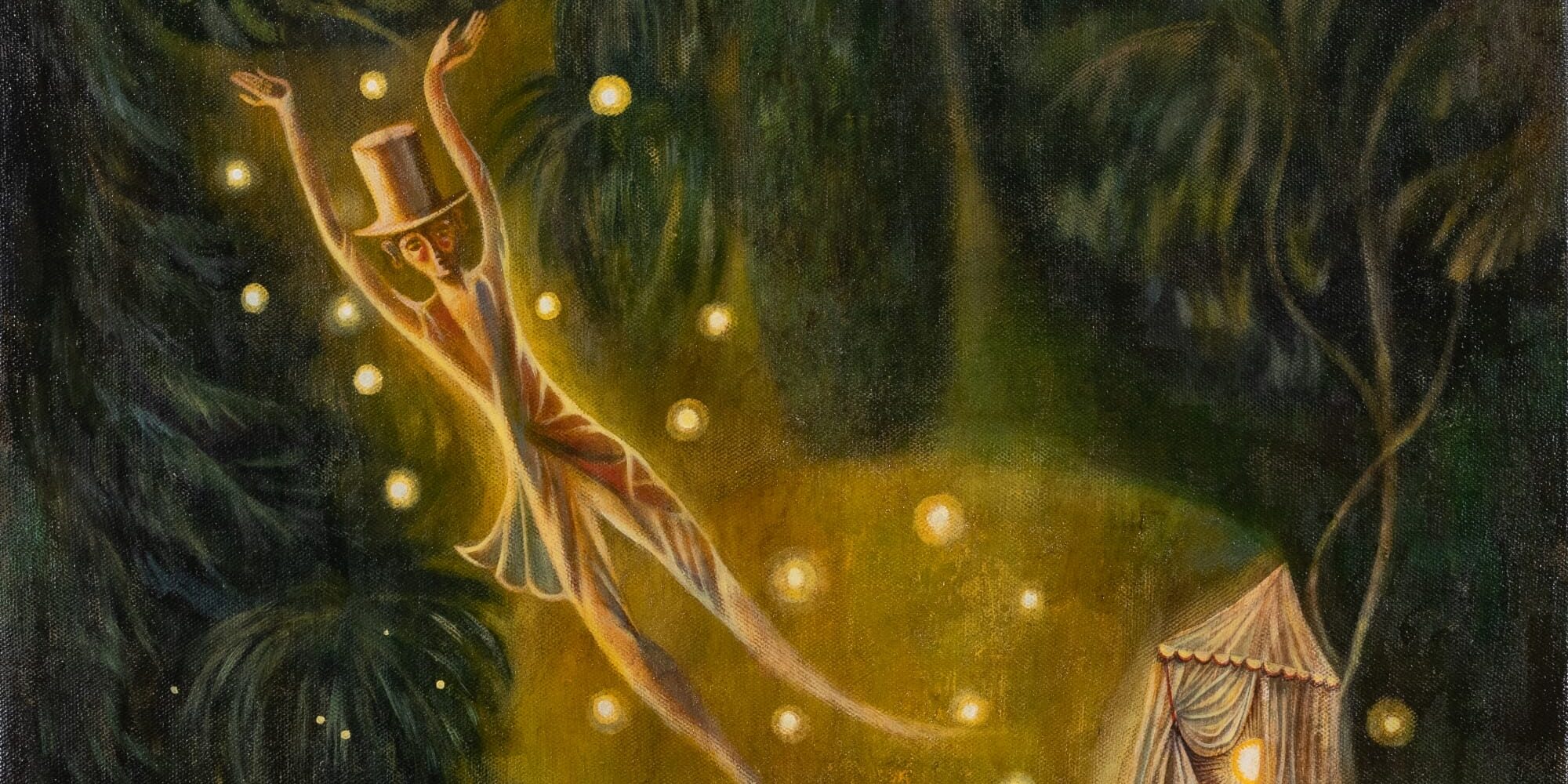
In a world filled with the literal and the explicit, ambiguity can be both a refreshing perspective and a challenge to the norm. Renowned German artist, Olaf Hajek, seems to be harnessing this power to full effect in his intricate, detailed and often enigmatic illustrations that defy easy interpretation. With a style that is instantly recognizable across the globe, Hajek’s work continues to elicit intrigue, discussion, and speculation.
Born in Rendsburg, Germany, Hajek’s diverse career extends from illustrating international brand campaigns to creating book covers for major publishing houses and exhibiting his own independent artwork. His vibrant, cross-cultural imagery deftly combines real-world scenarios with the fanciful, often slipping into the surreal.
Recently, Hajek’s illustrations have been widely featured in online art platforms and forums, attracting a significant amount of attention and commentary. His portfolio portrays a unique interpretation of the human condition, exploring everything from love, fear, and passion to the darker aspects of human nature.
“The ambiguity in Hajek’s illustrations is deliberate,” says Amelia Ryan, an art critic who has been following Hajek’s work closely for over a decade. “They are like riddles waiting to be solved. The viewers are invited to construct their own narratives, and the interpretations can range from the heartwarmingly innocent to the downright ominous, based on the observer’s perspective.”
Consistency is a critical aspect of Hajek’s ambiguous style. His creations blend elements from different cultures, histories and mythologies. Yet, the subjects within the illustrations seem to exist harmoniously, embodying a sense of unity despite the apparent disparities.
A great example is one of his recent works; a woman is shown sleeping with her body entwined with a variety of plants, insects fluttering around her, and distant mountains in the backdrop. The illustration feels peaceful yet induces curiosity about her story. Is she dreaming? Is she at one with nature? As always, Hajek leaves it to the viewer’s imagination.
The artist’s unflinching dedication to blurring the lines between reality, fantasy, and memory is also displayed in his unique interpretation of popular tales. In one of his pieces, Hajek takes on Alice in Wonderland, invoking a distinctly African cultural context, populated with flamboyantly attired characters amidst vivid flora and fauna. This cross-cultural approach subtly challenges the conventional narratives underpinning famous works.
As an artist, Hajek has always been open about his fascination with the natural world, mythology, and the human psyche’s intricate maze. Exploring this fascination, he redefines what is familiar to us, breaking fences of cultural norms and inviting viewers to explore more profound meanings.
“What interests me most,” Hajek once stated, “is the ability to create an amalgamation of memories, emotions, and desires into a single piece. A piece that invites each viewer to interpret in their own unique perspective.”
As the impact of Hajek’s illustrations continues to resonate globally, an increase in discussions around his ambiguous stories is imminent. This calculated ambiguity extends beyond forcing us to reevaluate our perspectives; it encourages us to marvel and embrace the uncertain in an overly structured world.
From the ethereal to the everyday, from the joys of life to its darkest corners, Hajek’s imaginative and challenging work continues to inspire conversations, bringing a distinct edge to the visual arts canon. As more viewers immerse themselves in his work, the mystery and delight of unravelling the artist’s intention meet with the joy of personal interpretation, epitomizing the adage that art, indeed, is in the eye of the beholder.
In a world often craving clarity and straightforward answers, Olaf Hajek reminds us of the beauty that lies in uncertainty, the joy of not knowing, and the power of our interpretations.
Original Source: https://www.thisiscolossal.com/2026/03/olaf-hajek-surreal-illustrations/


