

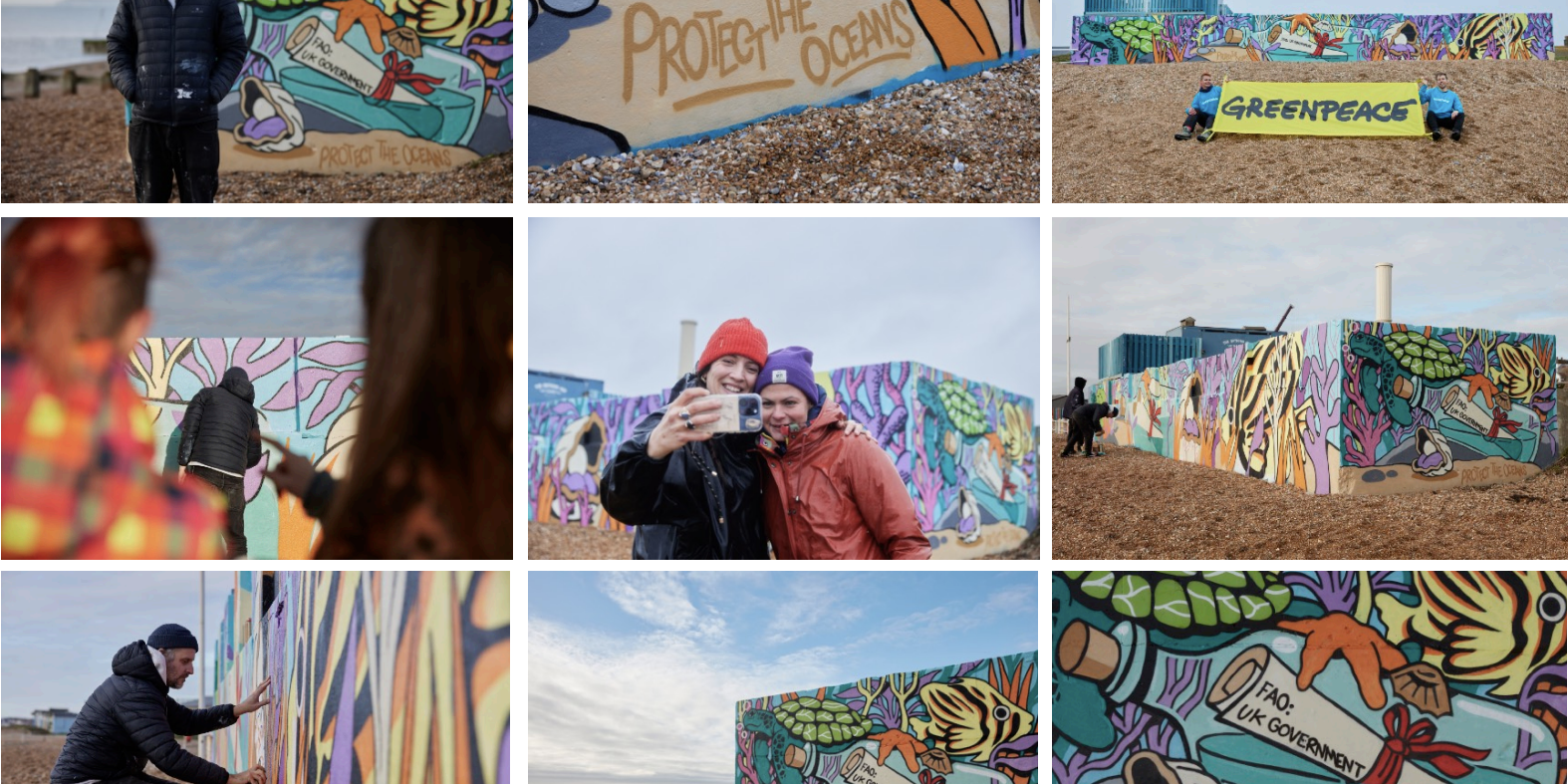
In the bustling urban landscape, a robust dialogue is taking shape – not in the city hall nor the town’s square, but on the alleys’ walls, fences, and building facades. Indeed, European street artists are graffitiing murals interpreting and responding to the recently implemented High Seas Treaty, which protect international waters from excessive pollution and overfishing. This unique approach to activism demonstrates street art’s evolving potential as a tool for commentary and advocacy in contemporary society.
Sprouting across countries like Germany, France, and England, these powerful murals are as diverse as the oceans they discuss. Yet, they share a common goal – raising public awareness around the complex environmental, economic, and political stakes of the new High Seas Treaty and promoting its understanding to a broader audience.
Let’s delve deeper: The UN-drafted High Seas Treaty represents a remarkable step towards environmental conservation. It sets an earlier unavailable legal framework designed to conserve and sustainably use marine biodiversity in areas beyond national jurisdiction. Such untamed territories make up nearly two-thirds of the world’s ocean, holding a wealth of resources and ecosystems, yet they have remained unregulated until now. Ensuring that these areas are used responsibly and equitably is integral to maintaining the overall health of our oceans.
A mural on a brick wall near Berlin’s hip Friedrichshain district brings this concept to life. A giant octopus fiercely guards a treasure chest overflowing with colorful marine life, highlighting the ocean’s precious bounty begging for safeguarding. Further east in Paris, a wave-engulfed ship underlines the impending doom of mismanagement of high seas, re-echoing the potential catastrophe if the treaty’s tenets are not appropriately implemented.
Glasgow-based online news outlet Roar News applauded the powerful aesthetics of the movement, stating: “The art is not only visually arresting but also an accessible way for the masses to engage with a complex subject matter.” Indeed, the application of street art’s narrative power in underlining oceanic risks proves an innovative approach towards reaching a broader public demographic.
The Guardian also chimed in, labelling the art movement as “Democracy’s new canvas.” It pointed out how, by provoking discourse in such public spaces, street art provides an inclusive platform for debate – regardless of social or educational backgrounds. Furthermore, the Bristol Post noted the role of street art in environmental protection, calling it a “powerful vehicle that lends a voice to voiceless creatures of oceanic depths.”
One artist whose work has fueled the global conversation is the enigmatic street artist Banksy, ironically using walls to break down barriers surrounding the treaty’s discussions. His famed piece ‘Girl with a Skimmer’, featuring a young girl trying to skim plastic waste on the sea shore with her hoop, is a stark reminder of oceans’ degradation. Banksy’s influence proves significant in highlighting the impacts of corporate and political decisions on the world’s most expansive and least governed waters.
Unsurprisingly, the initiative ignited a social media frenzy, spreading awareness about the development of the treaty and its implications. The hashtag #HighSeasTreaty gained significant traction on Twitter, Instagram, and Facebook. Both acclaimed artists and citizen activists shared images of the striking murals, accompanied by reflective captions and messages urging viewers to educate themselves about the treaty.
Several experts have lauded the use of street art voices to amplify an urgent conversation about the High Seas Treaty. The World Wildlife Fund’s recent blog post termed this organic surge as “Artivism,” stating that it “relays a potent message: the high seas matter and require robust protections.”
This innovative campaign applies street art’s narrative weight to provoke reflection, engagement, and activism around a critical global matter otherwise cloaked in legal and political complexity. It decidedly offers food for thought, while placing a spotlight on our waning oceanic health, and the crucial need to adhere to the High Seas Treaty’s directives. Thus, the strokes and sprays on streets worldwide are more than an aesthetic phenomenon; they are the rallying cries of a planet urging one to stop, look, and save its oceans.
Original Source: https://streetartnews.net/2026/01/a-message-in-a-bottle-street-art-responds-to-the-high-seas-treaty.html