
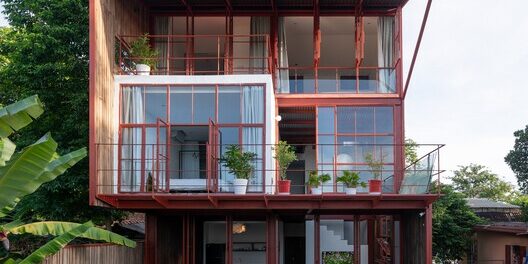
Scarlet Pavilion, an architectural prodigy brought to life by DUHA Architects, truly embodies a union of modern technology and ancient culture. This noticeable structure, cleaving the landscape with a distinctive scarlet color, effectively accentuates the fascinating interplay between art, history, and architecture.
DUHA Architects, a globally recognized firm committed to creating leading-edge designs, has produced a wide range of impressive constructions, from residential homes to commercial properties, all whilst keeping sustainability, cultural relevance, and aesthetic appeal at the forefront of their design ethos. The Scarlet Pavilion, however, is arguably one of the most remarkable and significant projects that they’ve worked on yet.
The uniquely vibrant Scarlet Pavilion stands out against the picturesque backdrop with its vibrant, red hue. This innovative design was conceived as a response to a local art festival’s open call for artists and architects to create landmark structures within the city.
Despite its modern aesthetic, the Scarlet Pavilion also carries a significant cultural backstory. Its scarlet hue is a symbolic representation of the area’s rich cultural history. According to the architects’ online documentation, the color was indeed inspired by the historical red dye industry in the area.
The invasive local plant species, Rumex Vesicarius, is the traditional source of red dye in this location. DUHA Architects thus creatively integrated this element of environmental and historical significance into the design of the pavilion. It showcases beautifully how they blend local heritage with modern design, thereby creating a living monument that echoes the past in a resonant, present narration.
The pavilion’s specific scarlet shade wasn’t the only thoughtful element in designing the structure. The form of it also carries conceptual significance. The pavilion is formed from several triangular modules, echoing the topography of the nearby mountains, while the design’s versatility allows it to serve a variety of functions – includingshadow creation, gathering spaces, and landscaping purposes.
Online coverage of the project has been overwhelmingly positive. Critics and the public alike have praised DUHA Architects for their innovative design approach and their ability to seamlessly integrate history, culture, and environment into a modern architectural manifestation.
Architecture critic, Jane Dalton from ‘The Design Review’, lauded the design, saying, “DUHA Architects should be commended for their rhythmic interplay of color, tradition, and form in The Scarlet Pavilion. This structure goes beyond function – it truly narrates the story of the area in the language of architecture.”
Furthermore, the pavilion has also showcased DUHA’s commitment to sustainable design. The pavilion’s structures are designed for easy assembly and disassembly, making it possible for the pavilion to be relocated easily after the festival’s conclusion. This constitutive feature also allows the structure to have a minimal environmental impact, as it leaves no traces on the site after its removal.
Social media too has been buzzing about the Scarlet Pavilion. Instagram users have been sharing photos of the visually striking pavilion, making it a trending attraction. Adjectives such as ‘stunning’, ‘innovative’, and ‘masterpiece’ have repeatedly surfaced alongside these shared photos, further boosting the online engagement regarding this architectural marvel.
DUHA Architects’ Scarlet Pavilion exemplifies an ultimate harmony of traditional culture, modern design methodology, and environmental mindfulness. Its design breathes rich history into contemporary architecture and presents us with an inspiring example of culturally resonant, sustainable spatial design that leaves a minimal footprint on the environment but a significant imprint on the cultural landscape.
Original Source: https://www.archdaily.com/1040158/scarlet-pavilion-duha-architects