
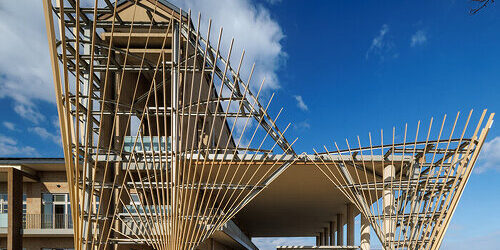
Prominent Japanese architect Kengo Kuma has recently unveiled his innovative architectural design in Chikujō, a quiet town in Japan. The new library’s main attraction isn’t its extensive book collection but the unique use of Hinoki, a type of Japanese cypress wood, sculpted into louvres radiating throughout the interior, lending a touch of elegance and tranquillity to the structure.
The Kengo Kuma and Associates firm is renowned globally for its creative use of natural elements within architectural designs. This time around, the firm intertwined tradition with modernity, melding Hinoki – considered one of Japan’s finest woods, with contemporary architectural aesthetics to create a stunning outcome known as the Chikujō Library.
In a society dominated by technology and digital media, libraries are striving for relevance, and Kengo Kuma’s vision for the Chikujō Library embodies a tangible solution. The library’s unique design is not just visually appealing, but it also fosters a serene environment, promoting quiet reflection and concentrated study.
Kengo Kuma’s use of Hinoki cypress in this contemporary design is not merely aesthetic. This Japanese cypress possesses antibacterial and insect-resistant properties; it is durable and has a light, pleasant scent that provides an overall calming ambiance. These qualities make it remarkably suitable for use in public spaces like libraries, mixing functionality with aesthetic appeal.
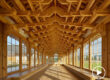
The louvred design serves another purpose, simultaneously enhancing the library’s visual facade and functioning as a natural filter for light and sound. Rows of Hinoki bars delicately arranged in a wave-like pattern allow sunlight to pour softly into the space, reducing the need for electrical lighting and in turn, creating an energy-efficient solution. The radiating louvres also act as a natural noise barrier, contributing to a tranquil and focused environment for library users.
Additionally, the library’s interior recedes in shelves structured in an arch form, wrapped by two-floored Hinoki cypress louvres. This bold and elegant design extends from the entrance to the mezzanine area, creating a delightful sight for visitors inside and outside the library.
Kuma’s Chikujō Library design has drawn attention and admiration from architects and architecture enthusiasts worldwide. It illustrates the ongoing relevance of public libraries in the digital age, showing that they continue to be important community hubs if they can adapt to changing user needs. Online, the library’s unique look and feel have been praised for bringing a breath of fresh air to the standard image of libraries as institutional and monotonous.
Kengo Kuma has always maintained that his architectural designs are inspired by the nature and culture of their location. The Chikujō Library’s design certainly encapsulates this mantra, combining traditional Japanese architectural elements with modern style, making the building both a link to Japanese traditions and a nod to the future.
Juxtaposing the old with the new, Kengo Kuma’s design for the Chikujō Library stands as a testament to the adaptability and fluidity of architecture. This unique combination of traditional materials with a modern approach not only serves a practical purpose but also elevates the entire look and feel of the building, making it an inspiring and peaceful space for learning, community engagement, and innovation.
The Chikujō Library is more than just a hub for knowledge; it is a symbol of ongoing evolution and development. With its radiating Hinoki louvres and overall aesthetic appeal, the library’s design asserts the importance of striking a balance between usability and beauty in architecture. The exceptional design adds a breath of fresh air to traditional library architecture, demonstrating the expanding role of libraries as cultural and community touchstones.
Original Source: https://www.designboom.com/architecture/kengo-kuma-radiating-hinoki-louvres-library-chikujo-japan/