

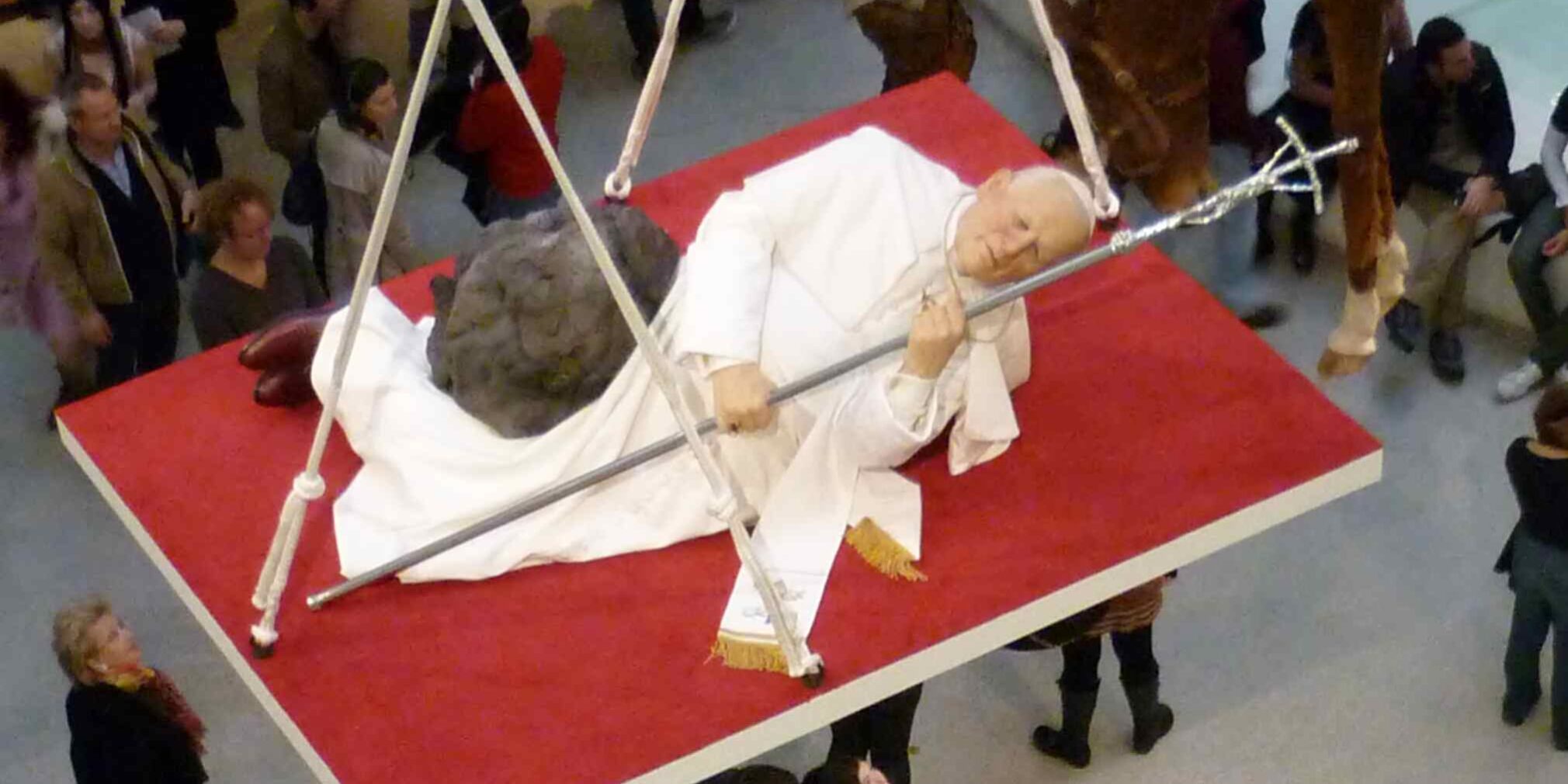
In an audacious move intended to explore human emotions, famed Italian artist Maurizio Cattelan has launched a confession hotline inviting individuals to anonymously confess their sins. The hotline is available around the clock where people are encouraged to use it as a platform to share their contrition after acts they regret.
Cattelan, famous for his satirically provocative works, including the 18-Karat-gold toilet entitled ‘America,’ continues to blur boundaries between art and life. The confession hotline, officially titled “The Sixth,” serves as the latest of his droll commentaries on modern society.
This innovative creation, which opened on Monday, 13 September, garnered substantial attention in the art world and beyond. It allows users to unburden themselves by dialing a designated number, +44 20 7711 6041, and imparting their transgressions for the record.
It is important to note that while the concept aligns superficially with the Catholic practice of confession, “The Sixth” is not affiliated with any religion. Cattelan, himself raised Catholic, comments on this resemblance, saying that his hotline echoes the function of a religious confessional — but devoid of absolution.
The Sixth is part of a larger exhibition titled ‘A Fair Land’ by Blenheim Art Foundation, wherein Cattelan presents new and existing works scattered throughout Blenheim Palace’s interiors. The confession hotline adds an unexpected dimension to this display, allowing visitors to leave the exhibition with more than just visual memories.
Despite skepticism from critics, Blenheim’s curator, Michael Frahm, says the hotline isn’t a gimmick but an integral part of Cattelan’s exhibition. “This adds a new layer of interaction and participation for the audience that impacts the exhibition space without physical intervention,” he said.
Many online users have been drawn into this art experiment, sharing it on social media platforms and forums, thus increasing its reach. According to online reports, the number of calls to the hotline has been soaring, indicating a successful public response. A spokesperson for the Blenheim Art Foundation was also reported as saying that the hotline had experienced “high volume.”
Just as significantly, it creates a unique dialogue about the notion of sin and guilt in the 21st century. With the hotline, Cattelan turns confession, an intimate act traditionally shared between a confessor and a priest, into a more public, albeit anonymous, spectacle.
Cattelan also confirmed that the anonymous confessions, while not rewarded with absolution, are set to become part of the show. The confessions recorded on the hotline are intended for use in a future art installation. However, all identifying details would be omitted to maintain absolute anonymity for those who bare their souls on the hotline.
The Sixth can be seen as the culmination of Cattelan’s ability to provoke public thought. From his infamous duct-taped banana artwork to his fully-functioning gold toilet, Cattelan maintains his knack for sparking critical discourse on societal norms.
The hotline provides a unique arena for individuals grappling with the gravity of their actions and thoughts. By transforming confessions into art, Cattelan encourages a dialogue on morality that transcends both personal and public spaces. The unveiling of Cattelan’s confession hotline underscores his continued commitment to pushing the boundaries of what art can be.
Nevertheless, the concept has sparked controversy, with numerous voices expressing concerns about ethical implications. Critics question whether this potentially cathartic anonymous service could be perceived as exploiting emotional vulnerability for artistic purposes. These questions, while valid, further the conversation about the role and responsibility of art in society.
Ultimately, Cattelan’s confession hotline is another testament to his relentless reimagining of art’s purposes and boundaries. Despite the debates and controversy it creates, “The Sixth” compels its audience to reflect on their actions and their understanding of sin in a contemporary context.
Original Source: https://www.artsy.net/article/artsy-editorial-maurizio-cattelan-launches-hotline-hear-people-confess-sins


