Renowned Polish artist and photographer, Weronika Gęsicka, has turned the tables on encyclopedias’ credibility in a thought-provoking experiment that has stirred up an intriguing online discourse, further highlighting the deceptive era of misinformation.
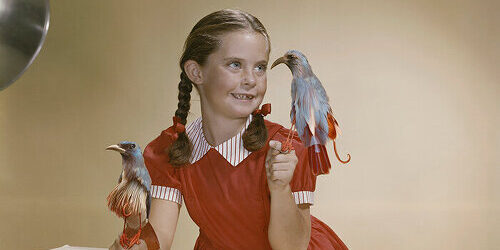
Gęsicka, known for her visually interrogative work on memory and its mechanisms, has again struck a chord with her project dubbed ‘Appendix, Index, Amendments, or Corrections’ using her wry wit and digital mastery to raise questions about truth, information, and their presentation.
Gęsicka delved into the extensive world of knowledge, specifically printed encyclopedias, believed to be a steadfast source of reliable information. However, her experiment showcased that even these venerable books are not beyond the realm of disinformation. The artist intriguingly meshed her artistic creativity with reality, planting hundreds of false entries across sundry encyclopedia volumes.
Accompanying each fallacious entry was Gęsicka’s work of art, amalgamating skillfully with the text and serving both as a deception and a clue for the unwary reader. The random yet absurd topics ranged from ‘Tofu Tax in Japan’ to ‘Blue Spiders in Australia,’ deliberately complex to separate the book’s inherent reliability and the reader’s inquisitive nature.
Although the experiment initially seems to have a playful undertone, the underlying inference around the integrity of information and its sources is profound, given the increasing incidence of fake news and misinformation epidemic pervading our digital lives.
“In a way, I wanted to question the authority of publications that are considered serious and reliable. I find it interesting to observe how easily we believe in certain things,” Gęsicka explained.
The experiment has received substantial attention online, from art enthusiasts to those passionate about technology’s intersection with information credibility. Many social media users have praised Gęsicka for her innovative approach to spotlighting the delicate issue of truth in the internet age.
Adding to the credibility of the experiment, the artist ingeniously chose second-hand or discarded encyclopedias from thrift shops, altering these volumes and putting them back on the shelf devoid of any identification of tampering. Similar to the almost undetectable digital disinformation, her interventions are insidiously woven into the fabric of what we perceive as truth.
Art critics and media experts draw parallels between Gęsicka’s work and the current information landscape plagued with falsehoods, pointing out the pernicious ease of producing and distributing misinformation.
Denis O’Reilly, a media studies professor at the University of Dublin, asserts, “Gęsicka’s project stands as an important commentary on our relationship to knowledge sources. In a society where misinformation can be spread so easily, her work serves as a reminder of the critical need for media literacy.”
In a twist of irony, while Gęsicka challenges established truth, her experiment has been imitated by anonymous internet users on other platforms as well, planting their versions of misinformation. From Wikipedia edits to online forum threads, the internet has seen a rise in deceptive entries, blurring the line between mockery and a bitter taste of reality.
As we navigate the deep and intricate seas of data and information, Weronika Gęsicka’s audacious experiment offers a stark reminder to approach with caution, synthesize with thought, and never to accept anything at face value.
As Gęsicka herself rightly states, “Data can be tweaked, pictures can be manipulated… I hope people will think twice before believing everything they read.” In times of omnipresent misinformation, these words couldn’t ring truer.
Original Source: https://www.designboom.com/art/encyclopedias-weronika-gesicka-fake-entries-interview/


