

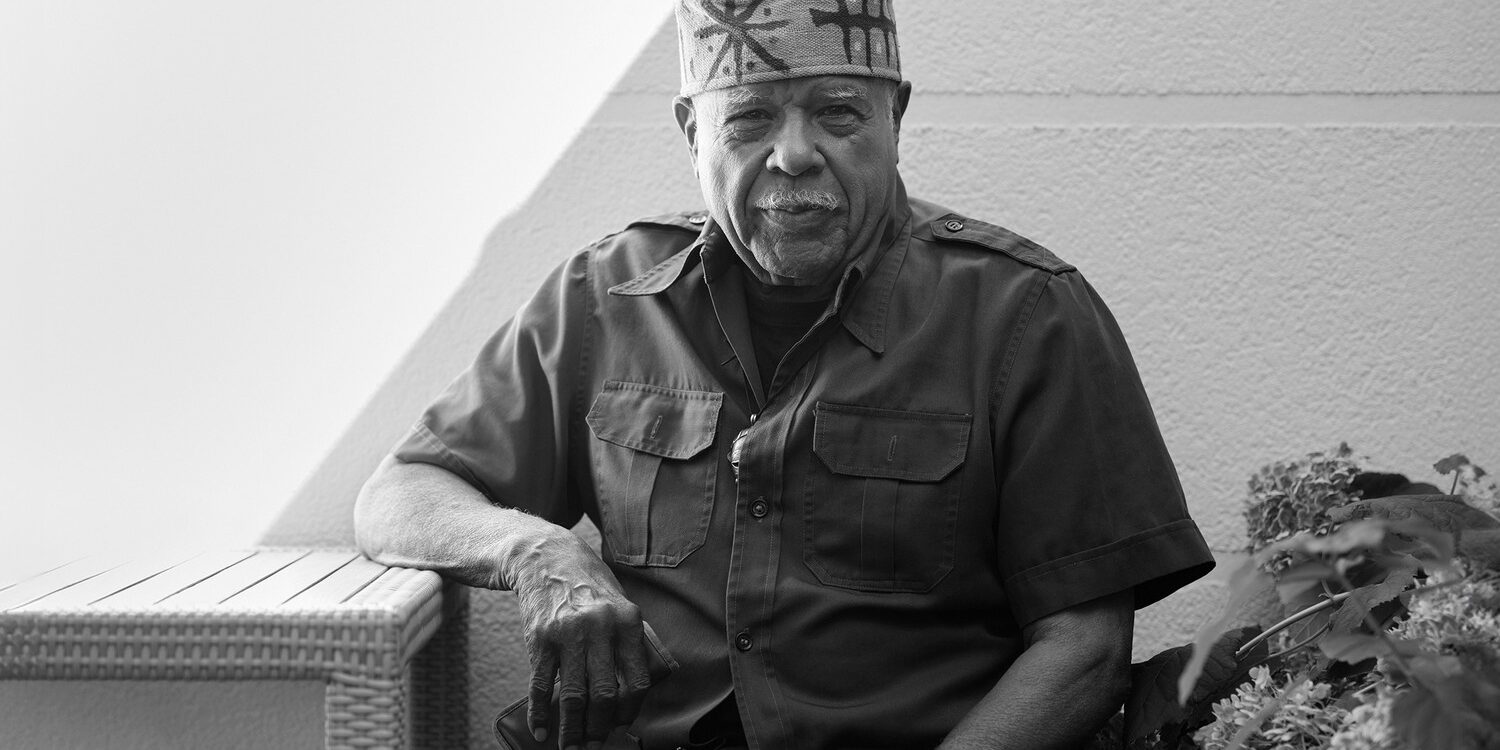
Pioneering African American artist and sculptor Melvin Edwards, revered internationally for his provocative metalworks that challenged racial, political, and social issues, passed away at the age of 88. Edwards’ death was confirmed by Alexander Gray Associates, his representing gallery in New York.
Born in Houston, Texas in 1937 and growing up in a segregated society, Edwards’ artwork often encapsulated his experience, genuinely reflecting the African American narrative. Edwards used the medium of steel, his powerful tools in creating art that shook the spectator, deeply immersed in its meaningful context.
Over a career spanning six decades, Edwards became a powerful voice in the arts. He was celebrated for his Rocker series, Lynch Fragments series, and Bar series, all marvellous works that subtly yet powerfully addressed the civil rights struggles and integrated African and African American art and history.
The Lynch Fragments series was particularly remarkable, a collection of hundreds of miniature, abstract masks forged from industrial scrap metal. The series poignantly addressed racial violence, representing the past, present and future. Edwards’ Bar series fused style, form, history, and personal experiences, making audiences introspect on issues of societal bias, prejudice, and injustice.
Edwards was the first African American sculptor to have a solo exhibit at the Whitney Museum of American Art in 1970, a veritable testament to his exceptional artistic prowess. The artist’s later years were spent in Plainfield, New Jersey, working in his studio and creating influential works that continued to critique societal discrimination and brutality.
Among Edwards’ numerous institutional honors, he received the United States Artists Fellowship in 2007, represented the US at the Venice Biennale in 2011, and was awarded honorary doctorates from the Massachusetts College of Art and Design and the University of Maryland Eastern Shore.
“Edwards combined elements of minimalism and politically engaged art, creating a new vision of Black aesthetics in contemporary art that continues to reverberate today,” said Jack Shainman, owner of the Shainman Gallery. His work has been exhibited in prominent institutions, including MoMA, Tate Modern, LACMA, The Studio Museum in Harlem, and hundreds of exhibitions worldwide.
The recent social media outpouring for Edwards has shown the artist’s immense influence on both the art world and its spectators. His passing was mourned by several international institutions and his contemporary artists, affirming the enduring eminence of his art.
Melvin Edwards’ exceptional contributions to modern art have cemented his position among America’s esteemed sculptors. Sweat and iron was the raw yet refined language he used to communicate, the steel resonating with the writhing conversations on U.S race relations, civil rights, and African identity.
His repertoire was not limited to steel alone; he was a proficient draftsman and printmaker. Edwards’ works on paper parallel his sculptures, reflecting his lifelong exploration of the societal, historical, and material intersections that define us.
As the world mourns the passing of this inspirational artist, the enduring power of Melvin Edwards’ work continues to challenge, invigorate, and inspire. Though his presence will be missed, his legacy—etched in steel—will resonate within the art world, and the echoes of his voice will continue to drive conversations on society, history, and humanity.
Original Source: https://www.artsy.net/article/artsy-editorial-american-sculptor-melvin-edwards-dies-88


