

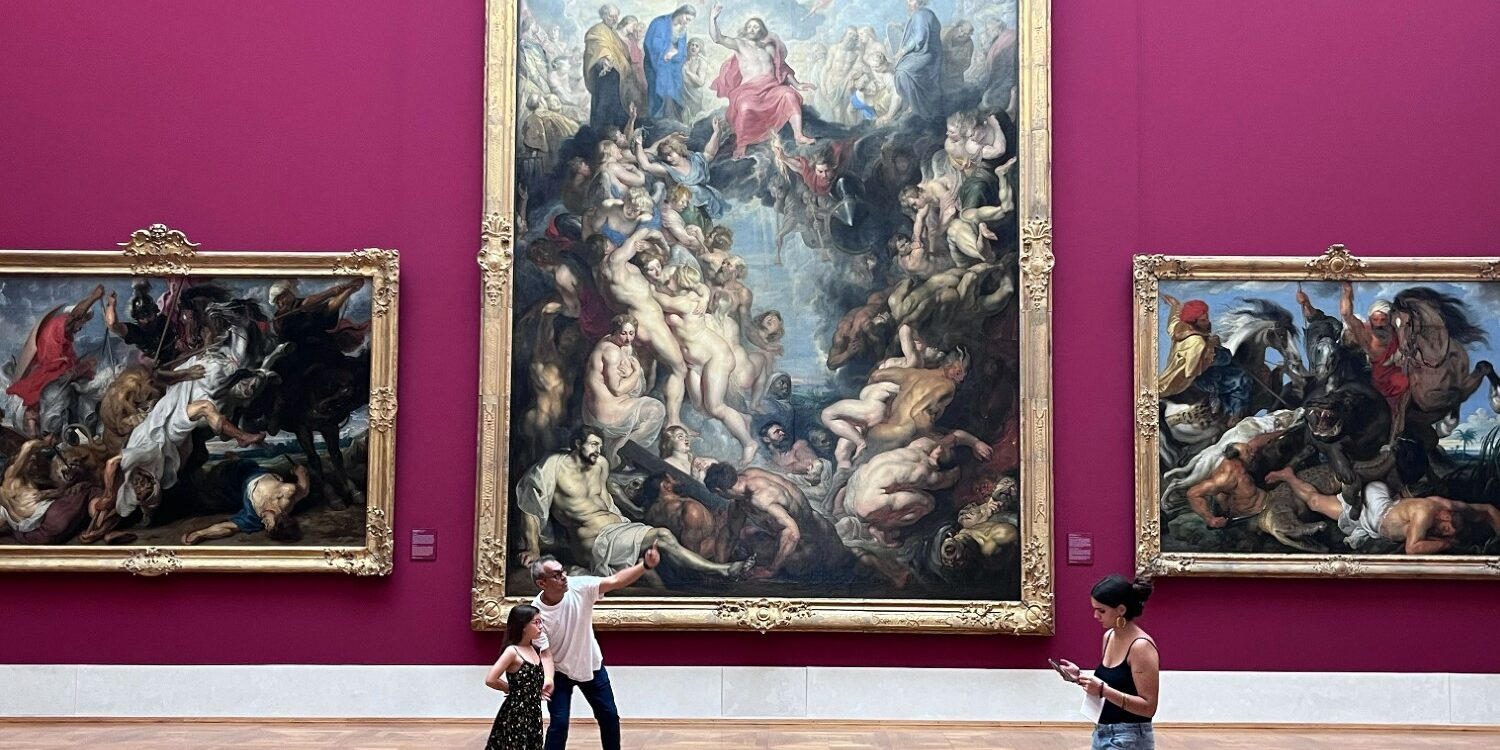
Capturing stunning photos of art is not an easy task. It can be a slide into a rabbit hole of challenges – from dealing with reflections, ensuring color accuracy, to defining texture, and coping with lighting aspects, among others. However, following experienced guidance can significantly enhance the outcomes. Renowned artists and photographers have shared their insights for budding artists and photographers.
To take a perfect photograph of an artwork requires a unique match of technical skills and a keen eye for detail. Leading artists around the globe agree that some important aspects can make all the difference, such as effective lighting, positioning, framing, color balancing, and post-production editing.
Renowned Australian artist and photographer, Christian Fletcher, argues that lighting is one of the most crucial factors in taking a great picture. According to Fletcher, soft, indirect light is ideal. He suggests using light diffusers or placing the art piece where it can receive diffused daylight. As direct light can create shadows and hotspots, which distort the true colors of the artwork.
Apart from lighting, positioning of the art is another key aspect to consider. Experts from the Smithsonian Institution’s imaging studios underline the importance of keeping the camera lens and the artwork parallel to each other to eliminate distortion. They recommend using a tripod to stabilize the camera and ensure the art remains the primary focus.
Artists also emphasize the need for accurate framing. They argue for the artwork to fill as much of the frame as possible while ensuring the inclusion of the entire work to avoid cropping or distortion later. Ben Clasen, a commercial artist and photographer from Seattle, points out the importance of using a higher perspective when photographing statues or 3D artworks in order to present a complete view of the artwork.
Moreover, post-production is an important step and should not be avoided. Dutch artist, Rineke Dijkstra, notes that the color balance should be adjusted in post-production to ensure the artwork’s colors are presented as true to life as possible. Various software such as Adobe Photoshop and Lightroom offer such features with tutorials available online on how to use them.
Artists also recommend using the RAW mode on digital cameras, as it captures the maximum amount of data, which is advantageous in post-production. Anthony Maddaloni, a New York-based photographer, highlights the need to use a good quality camera for the best results. He suggests investing in a high-resolution DSLR and using a lens with a focal length of 50mm or more to maintain the artwork’s perspective.
On closer inspection of online forums and sites, there seems to be consensus among artists and photographers – attention to detail, patience, and an understanding of one’s equipment are essential skills. Beautified Stories, an online platform for photographers, shares several user-friendly video tutorials highlighting the entire process of photographing artwork in a simplified manner.
However, more important than mastering the technical skills is to understand the artwork itself. As conveyed by Sophie Calle, a famous French artist, “Sometimes an artwork asks for a different approach. There is no one-size-fits-all recipe. There has to be a dialogue between the artwork and the photographer.”
Therefore, it seems the key to beautifully portray artwork in photography lies not just in one’s technical prowess, but in the ability to interact and understand the artwork, letting it guide the choices of light, angle, and frame. With the right blend of the artist’s insight and adequate technical knowledge, it seems that anyone can now capture the soul of an artwork in a photograph.
Original Source: https://www.artsy.net/article/artsy-editorial-great-photographs-art-artists


