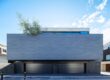

Though it’s commonly famed for its tulips, canals, and its progressive attitude, Amsterdam can now add architectural inspiration to its list of draws. In a residential setting not far from the city’s bustling center lies a remarkable testament to ingenuity – a refurbished structure that was once a grimy sewage tank, now a modern, sleek, geometric apartment. This transformation is testimony to the creativity of the human mind when it comes to recycling architecture, making sustainability stylish in the metropolitan sphere.
Devised by Atelier d’Architecture Bruno Erpicum & Partners, the Belgian architectural firm renowned for its minimalism, the project marries form and function, sustainability, and style in an unprecedented fashion. The revitalized tank now stands as a geometric masterpiece, a regenerated piece of industrial heritage trussed up to meet all the needs of urban living.
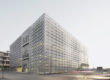
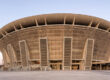
With its conceptual aesthetics and stripped back palette, this refurbished sewage tank apes the surrounding urban environment while simultaneously pushing the envelope of functionality and aesthetics. The design leans heavily into both the peculiar shape of the structure and its urban context. This principle is evident in the apartment’s exterior, structured to merge with the geometric modernity of the surrounding cityscape.
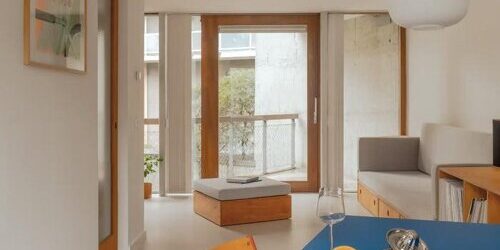
True to its minimalist design ethos, the interior capitalizes on limited space by applying clever solutions to maximize the potential for living comfortably. The ingenious use of mezzanine levels within the cylindrical structure for sleeping and relaxation areas meets the challenge posed by the original rounded architecture. These interim levels maximize space while adding to the aesthetic intrigue of the living quarters. Meanwhile, the main floor constitutes the hub of the house, hosting dining, cooking, and socializing spaces.
To cope with limited natural light, the cutting-edge apartment employs strategic placing of skylights and windows, infusing the interior with a warm, inviting atmosphere. The polished concrete floors enhance this radiance, reflecting light all across the apartment spectrum, hitting on the dual advantages of stylish aesthetics and thermal mass.
In terms of sustainability, the adaptive reuse of the sewage tank is a case study in architectural recycling. Utilizing the existing infrastructure cuts down considerably on new materials and the energy typically expended in new construction. This project exemplifies that ‘green’ design and high-end living need not be mutually exclusive.
Online reaction to the transformed tank has been primarily positive. There’s been an overwhelming appreciation for the innovative architecture’s distinct aesthetic and commendation for its environmental consciousness. Some have expressed their curiosity concerning its unique looks, citing the apartment as a piece of inspiration for their own home decor. The phenomenon of disguising industrial heritage to serve as residential fodder hasn’t gone unnoticed either. Social media was awash with praise, with Twitter user @minimalmax saying, “What a genius way of repurposing! Already dreaming of waking up to that skylight.”
Despite differing opinions, there’s no doubt that this project represents a profound shift in architectural thinking – by reclaiming, reusing, and recycling the old, new spaces are created that are both environmentally friendly and aesthetically appealing. It also opens up intriguing possibilities for the future, arousing curiosity about how we might continue to reuse and repurpose existing structures.
In an age of pressing environmental concerns, this project stands as a powerful symbol of the ability to combine architectural innovation with sustainable practices. Once a humble former sewage tank, the transformed structure in Amsterdam is now a beacon of minimalist geometric design, flaishing its fresh aesthetics while setting a new precedent for sustainable urban living. Whether or not the trend will catch on more widely remains to be seen, but its demonstration of the possibilities for architectural transformation cannot be ignored.
As an exemplary representative of the resource-conscious era we live in, this project beckons us to think ‘inside the box’. No longer can we afford to reject what’s already there. Instead, we must look at ways to ingeniously repurpose and reinvent – just like this distinctive minimalist geometric apartment in the heart of Amsterdam.
Original Source: https://www.designboom.com/architecture/former-sewage-tank-minimal-geometric-apartment-amsterdam-trommel-no-4-plnlstudio/