

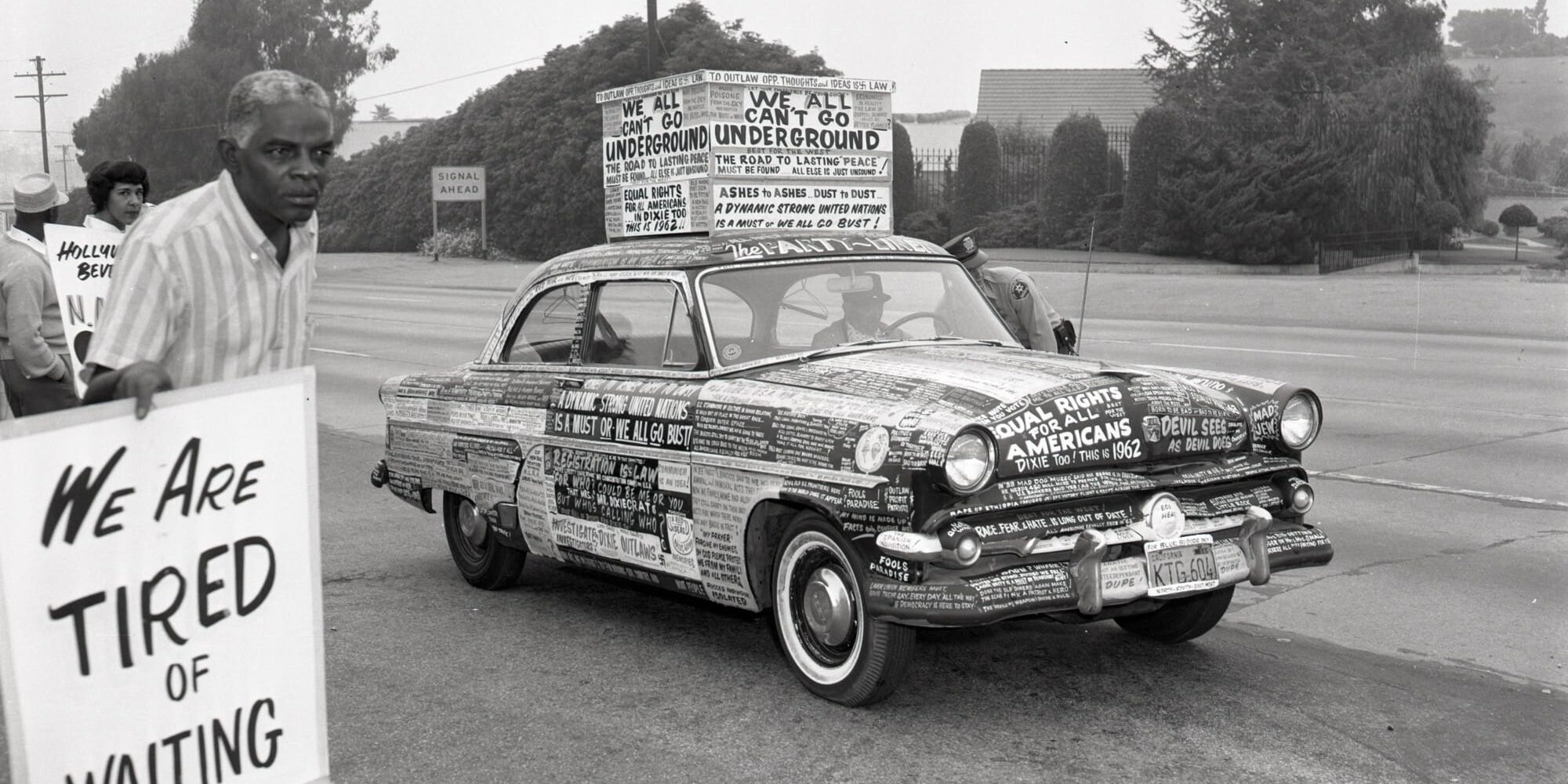
The Black Arts Movement (BAM), flourishing primarily from the mid-1960s to the mid-1970s, was pivotal in shaping African American cultural identity and expression. While the movement is often associated with literature and performance, photography played an equally critical role in articulating its collective voice and aesthetic vision. Iconic images captured the urgency of social change and fostered a sense of solidarity that resonated throughout the African American community and beyond.
Key details
Photographers such as Gordon Parks, Roy DeCarava, and Herb Snitzer documented the realities of African American life during a time fraught with racial tensions and political upheavals. Parks, well-known for his work with Life magazine, often used his lens to convey the injustices faced by African Americans, producing haunting images that highlighted the struggles within urban environments. His photo essays humanized subjects who had long been marginalized in mainstream media.
Meanwhile, DeCarava’s intimate depictions of Black families and communities became a testament to the richness of African American life. His black-and-white photos challenged prevailing stereotypes, presenting a dignified portrayal that emphasized resilience and beauty. Through works that captured everyday moments, DeCarava’s photography offered a counter-narrative to the dominant discourse of oppression.
Why this matters
The photographic output of BAM artists was not merely artistic; it served a sociopolitical function that sought to redefine Black identity in America. In a society grappling with civil rights struggles, these photographs served as both protest and celebration, inspiring pride among African Americans while drawing attention to their plight. By exhibiting their work in galleries and community spaces, BAM photographers ensured that their messages reached a wider audience, fostering understanding and empathy.
Moreover, these images contributed to a broader dialogue about race, identity, and representation in America. The visual narratives provided critical commentary on systemic inequalities, challenging audiences to reconsider preconceived notions about race. This was particularly significant in an era when mainstream media often portrayed African Americans in reductive or negative ways. BAM photographers not only documented familial and communal bonds but also encapsulated the fervor of a generation demanding social justice and cultural recognition.
Broader picture
The legacy of the photographs from the Black Arts Movement extends beyond the era itself. These images helped to lay the foundation for contemporary discussions surrounding race and representation in art. Photographers today draw inspiration from the techniques and themes pioneered by BAM artists, continuing the trend of using photography as a means of activism and expression.
In contemporary art discourse, the significance of BAM photography is often revisited, acknowledging how these artists wielded their cameras as tools for challenging societal norms. Their works, archived and celebrated, remind us that visual storytelling remains a powerful medium for enacting change. As we reflect on this movement, it becomes evident that the photographs which emerged were not mere depictions, but vital elements of a broader cultural renaissance, contributing to an ongoing narrative that seeks to redefine the racial landscape of America.
Original Source: https://www.thisiscolossal.com/2026/05/photography-black-arts-movement-exhibition/


