
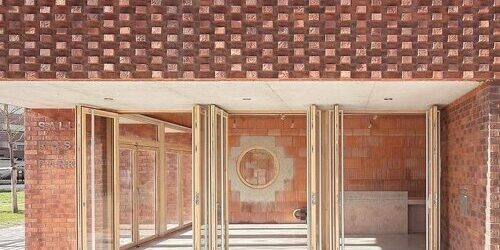
A new architectural feature has emerged at a community center in a Paris park, where a striking glazed façade has been integrated into the existing monolithic brick structure. This juxtaposition of modern design elements against a traditional building style captures the attention of locals and visitors alike, promising to reshape how community spaces are experienced.
Background and context
The community center, situated within the lush surroundings of Parc de Bercy, has long served as a hub for neighborhood activities, including classes, workshops, and social events. Originally constructed in the late 20th century, the brick building embodied a utilitarian design that prioritized functionality over aesthetics. Despite its sturdy presence, the center faced challenges regarding visibility, inviting engagement, and fostering connections among various community groups.
In recent years, urban planners and architects have increasingly recognized the need for public spaces that not only serve practical purposes but also encourage interaction and inclusivity. The decision to update the community center was motivated by these contemporary values, with an emphasis on transforming how residents connect with their environment. This led to the innovative design solution that now characterizes the structure.
Latest developments
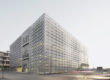
The newly added glazed façade is a game-changer for the community center, combining transparency and sleek aesthetics. Made from energy-efficient glass, this wall allows natural light to flood into the building, creating a warm and inviting atmosphere. Moreover, it acts as a visual link between the interior and exterior, inviting park-goers to engage with the activities taking place inside.
Architects aimed not only to improve the functionality of the community center but also to inspire a new identity for the space. The façade incorporates vibrant colors that reflect the diverse spirit of the neighborhood, setting the tone for a lively gathering place. Feedback from local residents has been overwhelmingly positive, with many expressing excitement about the transformed visual appeal and how it encourages greater foot traffic and community involvement.
The project is part of a broader urban revitalization initiative in the area, where creative architectural solutions are being deployed to enhance public spaces. As a result, this community center has become a focal point for revitalization efforts, positioning itself as a cornerstone for social engagement in the park.
What to watch next
As the community center adapts to its new architectural feature, various programming initiatives are anticipated to follow suit. Plans for workshops, festivals, and public events are being developed to celebrate the enhanced facility. Community leaders are keen to maximize the potential of the glazed façade by using it as a canvas for art installations or exhibitions that showcase local talent.
Additionally, urban planners are closely monitoring the impact of this design choice on community dynamics. Observing how the transformation of the space influences social interactions and participation will inform future projects within the city. As Paris continues to evolve, integrating innovations like these into public architecture will serve as a critical factor in developing inclusive communities.
This transformation of the community center not only enriches the local landscape but also stands as a testament to modern architectural practices that prioritize both aesthetic value and community engagement.
Original Source: https://www.designboom.com/architecture/glazed-facade-monolithic-brick-community-center-paris-park-atelier-mja-rosa-parks/