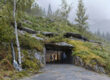

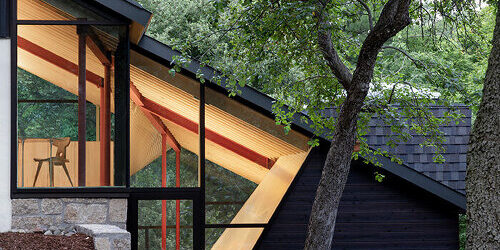
UUfie, a Toronto-based architecture firm, has completed a striking project known as the Angular Belfountain House. Nestled within the scenic Canadian forest, this home exemplifies an innovative approach to overcoming challenging topography. Built on a steep slope, the design both respects and enhances its natural surroundings.
What happened
The Angular Belfountain House was constructed in response to the unique characteristics of its site, which presents a rapid incline surrounded by dense forestry. The architects aimed to create a space that not only stands out from the landscape but also integrates harmoniously with it. Their vision materialized through angular forms and strategic placement, allowing the structure to interact with the forest’s topography.
Key elements of the design include expansive windows that frame views of the landscape while providing abundant natural light. The use of natural materials further emphasizes the connection between the home and its environment. By carefully choosing siding and stone that mimic the textures found in the surrounding forest, the architects reinforced the relationship between human habitation and nature.
UUfie’s approach pushes boundaries in modern residential design, demonstrating that it is possible to construct a visually compelling home that embraces its surroundings rather than dominating them.
What it means for readers
The design of the Angular Belfountain House may serve as a blueprint for future residential projects, especially in regions characterized by challenging landscapes. Homeowners and builders can draw inspiration from UUfie’s commitment to integrating structure and environment seamlessly. The project showcases the potential benefits of using contemporary architectural techniques that respect natural contours while maximizing aesthetic appeal.
For those interested in sustainable building practices, this project exemplifies how architecture can coexist with nature. Utilizing locally sourced materials and designing for efficiency can diminish a home’s ecological footprint. The principles demonstrated in this house may encourage a shift in mindset toward construction that prioritizes the environment and promotes sustainability.
What happens now
Looking ahead, the Angular Belfountain House could influence architectural discussions worldwide. As communities grapple with climate challenges and seek more harmonious living conditions, the lessons learned from this design may inspire future projects. Architects and designers could embrace UUfie’s approach to create more adaptive and resilient housing solutions amidst varying terrains.
Ultimately, the Angular Belfountain House does more than provide a residence; it stands as a testament to what modern architecture can achieve when it listens to the landscape. As more architects adopt similar philosophies, the prospects of sustainable and sensitive design may reshape not only residential living but also our relationship with the environment.
The most practical takeaway from this project is that when designing a home, the landscape should be considered an integral partner, not just a backdrop. A careful synthesis of architectural innovation and natural beauty may lead to sustainable, aesthetically pleasing outcomes.
Original Source: https://www.designboom.com/architecture/uufie-angular-belfountain-house-slope-canadia-forest-ontario/