
New York-based architecture firm WORKac has tackled the considerable challenges posed by a Rhode Island floodplain to create a model for resilient domestic living that marries a cutting-edge approach with environmental concerns. With climate change increasing floods’ frequency and severity, the development embraces a new and innovative way to manage domestic living in flood-prone areas.
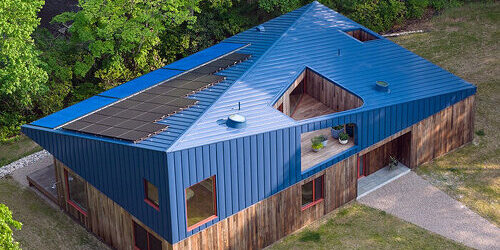
Located in Charlestown, Rhode Island, the futuristic private dwelling known as RISE House is ingeniously designed to mitigate the risks associated with a floodplain. Incorporating rain gardens and water storage capacity within its design, the RISE House showcases how constraining features can indeed be transformed into innovative, eco-friendly solutions. The residence cleverly combines the practicality of flood-resistant measures while simultaneously embracing an aesthetics approach that helps maintain a luxurious, comfortable living space.
The RISE House represents an ingenious approach to environmental architecture. WORKac, spearheaded by co-founders Amale Andraos and Dan Wood, has capitalized on the constraints provided by the floodplain to design a blueprint for resilient living. Their architectural design incorporates natural landscapes and highly-functional features that make the home practically flood-proof.
“This project represents a transformation of constraints into possibilities,” Andraos stated. The design includes a rain garden that absorbs the runoff during heavy rainfall, reducing the burden on city drainage systems. Besides, the 30-40,000 gallon water storage facility is integrated under the house to collect rainwater and use it for various domestic purposes, promoting water conservation.
The RISE House’s ground floor is designed as an open-air room that allows floodwater to flow through without causing damage. This ‘floodable’ space, as the architects term it, is designed for recreational use, motorcycle storage and maintenance, gardening, and other activities, while the living spaces are elevated above the flood line.
The house also incorporates solar panels and an airtight envelope to improve energy efficiency. The design uses composting toilets and a mechanical system for ventilation and dehumidification, which further contribute to the home’s sustainability and resilience, providing an energy-efficient, environmentally friendly alternative to conventional housing solutions.
The innovative blueprint of the RISE House has been lauded by environmental activists and architectural enthusiasts alike as a possible solution to climate change-induced housing crises. Environmentally conscious homeowners, in particular, have welcomed this marriage of aesthetics and sustainability, heralding a new standard for future residential architecture.
The success of RISE House provides a glimmer of hope for areas vulnerable to flooding and other environmental hazards. If adopted widely, these designs could significantly reduce emergency housing crises and rehabilitation costs associated with major flooding.
WORKac’s ambitious project reveals new possibilities for architects and urban planners to collaborate with the environment rather than work against it. This daring accomplishment challenges traditional ways of addressing environmental challenges and heralds a new approach for architects, suggesting that constraints can indeed become opportunities for inventive problem-solving.
The RISE House’s success not only represents a significant technological and creative achievement for the architects but also serves as inspiration for future architects and environmentalists to collaborate in innovative ways to provide eco-conscience, resilient housing solutions. It offers a snapshot of how architecture could shape up in the future: functional, resilient, sustainable, and remarkably adaptable in the face of growing environmental challenges.
WORKac’s accomplishment exemplifies a shift in the architectural world, towards a more eco-conscious and innovative approach. The RISE House demonstrates the power of considering our environment as a vital partner in the building process, rather than a hurdle to be overcome.
Original Source: https://www.designboom.com/architecture/workac-floodplain-constraints-model-resilient-domestic-living-rhode-island/