

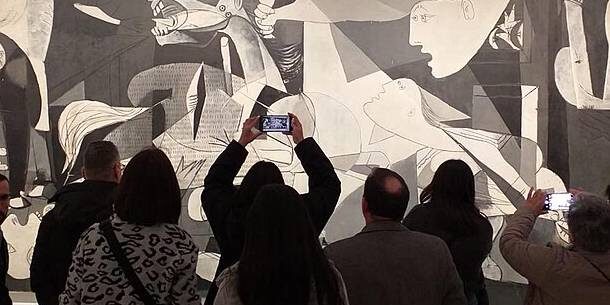
Breaking away from its domicile at Madrid’s Reina Sofia Museum where it has been housed for over three decades, Pablo Picasso’s iconic masterpiece “Guernica” might be setting forth on its first international journey. This monumental mural, painted by Picasso in 1937, has remained virtually stationary since 1992, prompting speculation and excitement across the international art community about its potential foreign outing.
Imbued with the soul-scarring devastation of the Spanish Civil War, “Guernica” is more than just a painting, it is an emblem of post-war, politically charged, and emotionally flooded art. Its potential departure from Madrid’s Reina Sofia Museum after 30 years has triggered intriguing debates and speculation within Spain and the global art fraternity.
Painted as a direct response to the Nazi’s devastating casual bombing practice on the Basque town of Guernica during the Spanish Civil War, the vast mural is an enduring symbol of war destruction. Measuring 11 feet tall and 25.6 feet wide, it bedazzles viewers with its sophisticated figures, distorted shapes, and striking monochrome palette.
With no official statement or detailed plans yet released, the story which first appeared on an art-focused social media account quickly rippled through various platforms. It was suggested that the painting could be included in a forthcoming Picasso retrospective abroad. Until then, any decision to relocate such a significant piece of Spain’s art, history, and national identity would likely be meticulous and conscientious due to its incalculable historical and cultural value.
The Reina Sofia Museum remains the custodian of this significant artwork. It was in 1992 when “Guernica” found its definitive home at the newly opened museum after meandering through various locations including Picasso’s studio, the Spanish Republican Government office, and then the Museum of Modern Art in New York, raising its international profile.
When asked about this speculation, the Reina Sofia Museum declined to comment, only stating that they can’t share details about upcoming exhibits or possible international tours of their collections. The echoes of the past tragedies and resiliency that “Guernica” encapsulates make this more than just ordinary news for Spain; it’s a national event.
Sharing or moving such a monumental work requires extraordinary efforts and precise planning. According to Dr. Felicity Strong, an art historian at the University of Melbourne who specializes in the movement of artworks, “transporting works as large and as valuable as ‘Guernica’ involves meticulously coordinated international efforts to ensure safe transportation and appropriate insurance.”
The potential relocation of Picasso’s “Guernica” resonates deeply in Spain, a country that considers it a national symbol. The painting’s rendition of the suffering endured during the Spanish Civil War makes it a particularly potent part of Spain’s cultural history.
Over the years, countless visitors have flocked to Madrid solely to witness “Guernica” in its full glory. It stands as a testament to the collective memory of a nation scarred by war, speaking volumes about human suffering and resilience.
Should “Guernica” indeed venture beyond the borders of Spain, it would not only mark a monumental moment in the artwork’s history but also significantly impact the international public’s access and connection to this iconic symbol of the 20th century.
While the news of “Guernica” leaving Madrid has sparked global interest, it has also led to the resurgence of conversations about artwork appropriation, national identity, and historical memory, serving as a fresh reminder of art’s profound ability to stir intense emotions and provoke thought.
As the world awaits official news about the potential journey of “Guernica,” it remains clear that whether stationary or in transit, Picasso’s mural will continue to captivate, inspire, and make us introspect about our shared humanity.
Original Source: https://www.artsy.net/article/artsy-editorial-pablo-picassos-guernica-leave-madrid-first-time-30-years


