

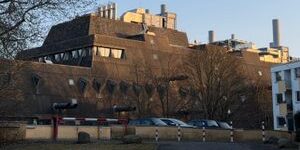
Dubbed the Mäusebunker (‘Mouse Bunker’), an iconic and controversial concrete structure in Berlin, Germany, finds its destiny hanging in the balance. This Brutalist edifice, renowned for its industrial aesthetics and grim shades of grey, stands as an emblem of 20th-century architectural design – yet it might not stand for much longer. Its survival is under threat due to a contentious demolition plan, sparking debates among architects, local residents, and historical conservationists.
The colossal Mäusebunker was designed in the 1970s by renowned architect Gerd Hänska with a specific purpose – to house a central animal laboratory for the Free University of Berlin. Its intricate pipework, large ventilation shafts, and suspended corridors seem straight out of a sci-fi movie, creating a chilling yet fascinating silhouette amidst the urban landscape. Its name, ‘Mouse Bunker,’ derives from its primary occupants over the years — numerous lab mice used in scientific inquiry.
However, despite its objective importance and historical relevance, the building has always been mired in controversy. Its construction went extremely over budget and took much longer than expected, leading to a wave of public criticism during its completion in 1981. The structure’s Brutalist style, despite having its admirers, has often been labelled as ‘ugly,’ and ‘out of place’ amidst the more traditional buildings of Berlin.
Today, the future of the Mäusebunker hangs in uncertainty due to a contested demolition proposal. The building was vacated in 2010 due to the high cost of maintaining the energy-inefficient building and complying with modern animal-protection standards, and it has been left abandoned ever since. For over a decade, various development proposals have been debated and discarded, from apartment conversions to a technology and innovation park. The current preferred plan is to tear the building down and construct a modern medical research facility instead.
This proposed demolition has stirred extensive online debate in recent weeks, igniting passionate arguments about architectural conservation, Brutalism’s place in modern cities, and the necessary evolution of urban landscapes. Brutalism, a divisive architectural style characterized by exposed concrete and blocky shapes, has long been polarizing, celebrated by some as a triumphant expression of function over form, and criticized by others as oppressive and alienating.
The online backlash against the proposed demolition campaign has been significant, with extensive digital petitions and social media hashtags dedicated to saving the Mäusebunker. One petition, ‘Save the Mouse Bunker,’ has already gathered thousands of signatures calling for the building’s preservation.
Many critics of the demolition argue that the Mouse Bunker represents an essential part of Berlin’s post-war architectural identity and should be protected as an historical artistic landmark. Others voice concerns about the environmental impact of demolition and new construction, calling for a more sustainable solution via adaptive reuse – a concept that repurposes existing buildings for new functions, thereby preserving history while reducing the carbon footprint.
On the other side, proponents of the demolition point to the building’s high upkeep cost, its outdated nature, and the need for development and modernization in the face of rapid urban and scientific growth. The Free University of Berlin has stressed the urgent need for a new research facility, arguing that it requires updated, efficient building infrastructure to continue making essential medical breakthroughs.
While no definite decision has been arrived at yet, the fate of the Mäusebunker underscores the difficult balance between historical preservation and urban progression. It is a compelling reminder of the complex relationship we have with our architectural past and the ongoing debates on how we envisage our future cityscapes. Regardless of its ultimate fate, the Mäusebunker serves as a prominent symbol of a bygone era, sparking conversations about architectural style, sustainability, and respect for history.
Original Source: https://www.atlasobscura.com/places/mausebunker


