

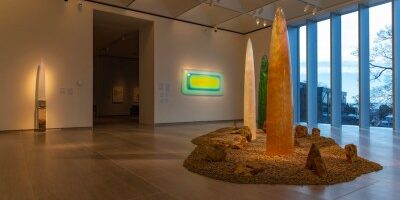
Internationally acclaimed Puerto Rican artist Gisela Colón recently shared insights on her beloved homeland, her admiration for pop culture icon Bad Bunny, and her perception of the latent power beneath Puerto Rico.
Colón, best known for her luminous, organically designed monoliths that seem to pulsate with life, embodies the essence of her native island in her work. In a recent discussion, she encompassed the vibrant tapestry of Puerto Rican culture, its socio-political environment, and the deep, rumbling power that lies beneath its surface.
The Puerto Rico that Colón loves and portrays isn’t solely defined by its crystal-clear waters and sun-dappled forests. The true strength of this island, according to Colón, lies in its resilient people and their steadfast resolve. From enduring environmental disasters like Hurricane Maria in 2017 to confronting political upheavals, Puerto Ricans have continuously demonstrated unwavering spirit and consciousness. Colón believes that this latent power, similar to the dormant volcanic activities beneath the island, has contributed to the richness and depth of Puerto Rican culture.
Simultaneously, Colón’s observations draw attention to Puerto Rico’s cultural heritage which is deeply intertwined with the communal spirit of resilience. From age-old Taino traditions to the recent Reggaeton revolution, Puerto Rico’s culture has consistently managed to thrive, reinvent, and sustain itself.
Which brings us to Bad Bunny. Benito Antonio Martínez Ocasio, popularly known by his stage name, is a Puerto Rican singer and rapper who shot to international acclaim with his eccentric fashion, Afro-Latin beats, and lyrics dripping with social commentary. Colón sees Bad Bunny as a representation of Puerto Rico’s cultural evolution and international impact.
Bad Bunny, in Colón’s view, embodies the versatility and audacious spirit of modern Puerto Rico. He resonates with the younger generation and has become a symbol of both creative expression and social activism. His inclusive discourse, particularly towards marginalized communities, has made him a notable figure in the global conversation around gender norms and LGBTQ+ rights, showcasing to the world the progressive side of Puerto Rican society.
Furthermore, Bad Bunny’s influence extends deeper into the socio-political realm. His stance against governmental policies and active involvement in the 2019 summer protests demanding the resignation of then-Governor Ricardo Rosselló, demonstrates his ability to leverage his global platform to shed light on local issues.
Notably, Colón’s views of Puerto Rico and Bad Bunny’s role in its cultural representation play out in her artwork too. Her bio-luminescent sculptures embody the same pulsating life and powerful transformative abilities that she sees in her homeland and its people, including figures like Bad Bunny.
In many ways, Gisela Colón offers a unique lens to view Puerto Rico beyond its picturesque landscape. Her discussion urges us to acknowledge the island’s vibrant cultural fabric, socio-political consciousness, and the influence of globally recognized figures like Bad Bunny.
Lastly, the core theme running through Colón’s insights and her art is the concept of power beneath the surface, waiting to emerge. It is the power beneath Puerto Rico—of its resilient people, its rich cultural traditions, and its influential international figures—that gives the island its true essence. This perspective presents a fresh and compelling narrative about Puerto Rico, shedding light on its strength, resilience, and unwavering spirit.
Original Source: https://www.artnews.com/art-news/news/gisela-colon-bruce-museum-puerto-rico-monoliths-1234778986/


