

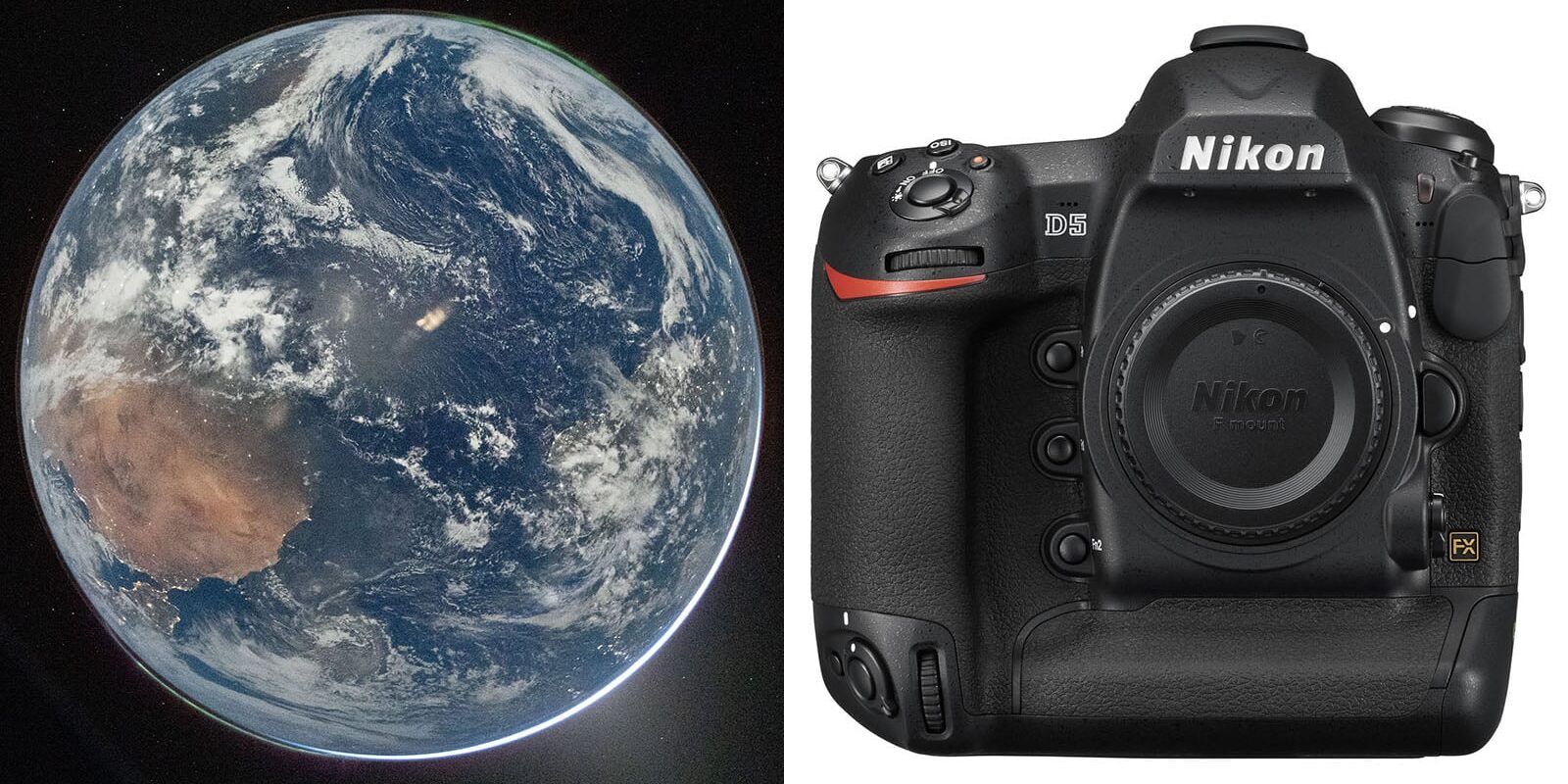
As we stand on the verge of the Artemis II mission, marking humanity’s triumphant return to the moon, one unlikely candidate is garnering significant attention. A 10-year-old DSLR camera, the Nikon D5, has established itself as the top contender for the mission, proving that sometimes old-school technology can shine in the most advanced arenas.
Upon first glance, it may seem curious that NASA would choose a decade-old camera for a mission as revolutionary as Artemis II. With constant advancements in photography technology, one would assume that the camera of choice would be a recent model. However, a deeper look into the robust capability and the longstanding partnership between Nikon and NASA provides a clear reason behind this choice.
The Artemis II mission, unlike its predecessor Artemis I, will carry humans, marking it as the first crewed lunar mission since Apollo 17 in 1972. This increases the enormity of capturing not just awe-inspiring visuals but also valuable scientific data. Hence, the use of a robust, reliable camera like Nikon D5, familiar to the astronauts, cannot be overstated.
Having undergone an excruciatingly detailed assessment by NASA to ensure its performance in the demanding environment of space, Nikon D5 stood out for its excellence. The camera’s speed and accuracy, its intuitive control layout, long-lasting battery life, and its rugged construction make it the perfect partner for the high-stake lunar mission.
Additionally, the camera’s ability to capture high-quality images in low-light conditions is a crucial factor. The far side of the moon, also known as the dark side, offers lighting conditions far from those typically seen on Earth, making a camera with exceptional low-light performance an absolute necessity.
It’s worth noting that Nikon has had a longstanding relationship with NASA, dating back to 1971 when NASA used the Nikon Photomic FTN during the Apollo 15 mission. This longstanding partnership underscores Nikon’s credibility and the trust NASA has in their equipment. The use of Nikon D5 for the Artemis II mission simply validates this established reliability.
In line with this, a recent study by Lenstore ranked the Nikon D5 as the most-used camera in space, a testament to its robustness in the challenging conditions of space. The majority of the 1.4 million images taken in space since the start of the NASA program have been captured using Nikon cameras.
Critics may argue that the Nikon D5, with its lower megapixel count compared to the latest models, may not be the best fit. However, experts point out that more megapixels do not necessarily equate to better photo quality. For a mission like Artemis II, reliability, durability, and proven performance are more critical than having the latest advancements that remain untested in space conditions.
While the Nikon D5 is not the only camera gear set to accompany the Artemis II mission, it represents a trusted workhorse. Alongside Nikon, Hasselblad and RED will compliment the mission’s imaging capabilities with their state-of-the-art equipment, ensuring a comprehensive capture of this historic venture.
Communities of space and photography enthusiasts alike are eagerly awaiting the extraordinary visuals this crewed mission will deliver. As relics of a bygone era grace the forefront of modern space exploration, the Nikon D5 offers a pleasant reminder of the timeless value some technologies hold.
In conclusion, the Canon D5’s selection as part of the iconic Artemis II mission further cements Nikon’s spot in space history – a testimony to the timeless capability and reliability that a decade-old DSLR can bring to this epoch-making endeavour.
Original Source: https://petapixel.com/2026/04/06/the-10-year-old-nikon-d5-dslr-really-is-the-best-camera-for-artemis-ii/


