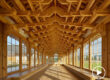

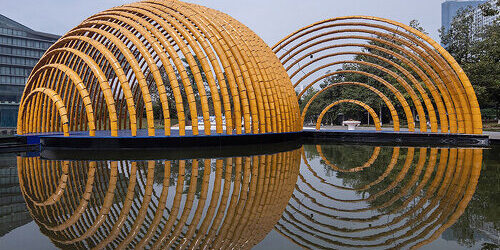
In a remarkable fusion of modern design and traditional materials, H&P Architects has introduced a new pavilion in Hanoi, characterized by its arching, bamboo-like structure adorned with glazed ceramic tiles. This innovative installation is part of an ambitious project aimed to enhance urban spaces while promoting a dialogue between contemporary architecture and cultural heritage.
Key details
The pavilion, designed to serve both functional and aesthetic purposes, features a sweeping form that mimics the organic curves of bamboo, a plant deeply rooted in Vietnamese culture. The use of glazed ceramic tiles not only pays homage to traditional craftsmanship but also offers durability and weather resistance, ensuring the structure can withstand the climate of Hanoi. Measuring approximately 250 square meters, the pavilion incorporates a series of open and semi-enclosed spaces, accommodating community events, exhibitions, and relaxed social gatherings.
H&P Architects aimed to create a space that elicits a sense of tranquility and connection with nature, evident in the design’s intentional integration with the surrounding environment. The structure’s strategic placement allows for ample natural light while providing shelter from the elements, enhancing the user experience. The design team undertook significant environmental considerations, focusing on sustainable materials and energy-efficient practices throughout the construction process.
Why this matters
This pavilion marks a significant contribution to Hanoi’s evolving architectural landscape, reflecting a growing trend towards sustainable urban environments that prioritize community engagement. By utilizing locally sourced materials and traditional techniques, H&P Architects not only supports local artisans but also fosters a sense of pride and identity among residents.
The pavilion serves as a compelling case study in contemporary architecture, illustrating how modern design can coexist harmoniously with cultural identity. As cities worldwide grapple with rapid urbanization, the need for spaces that facilitate social interaction while celebrating local contexts becomes increasingly critical. The pavilion’s design encourages community involvement, urging locals and visitors to engage with the space and with one another.
Broader picture
H&P Architects’ pavilion in Hanoi is emblematic of a broader movement within architecture that seeks to balance innovation with tradition. As urban centers face the challenges of space limitations and environmental considerations, such projects highlight the potential for aesthetic expression grounded in cultural resonance. This pavilion not only enhances the fabric of its immediate surroundings but also serves as an inspiring model for future architectural endeavors in similar contexts.
In conclusion, as cities continue to evolve, the introduction of structures like the H&P Architects pavilion is a reminder of the importance of design that is both thoughtful and context-responsive. The pavilion challenges conventional boundaries in architecture, suggesting new possibilities for how urban spaces are conceived and utilized. With its unique blend of tradition and modernity, it stands as a testament to the value of integrating cultural heritage into contemporary architectural practices.
Original Source: https://www.designboom.com/architecture/hp-architects-arching-bamboo-pavilion-glazed-ceramic-tiles-hanoi-vietnam-ashui/