

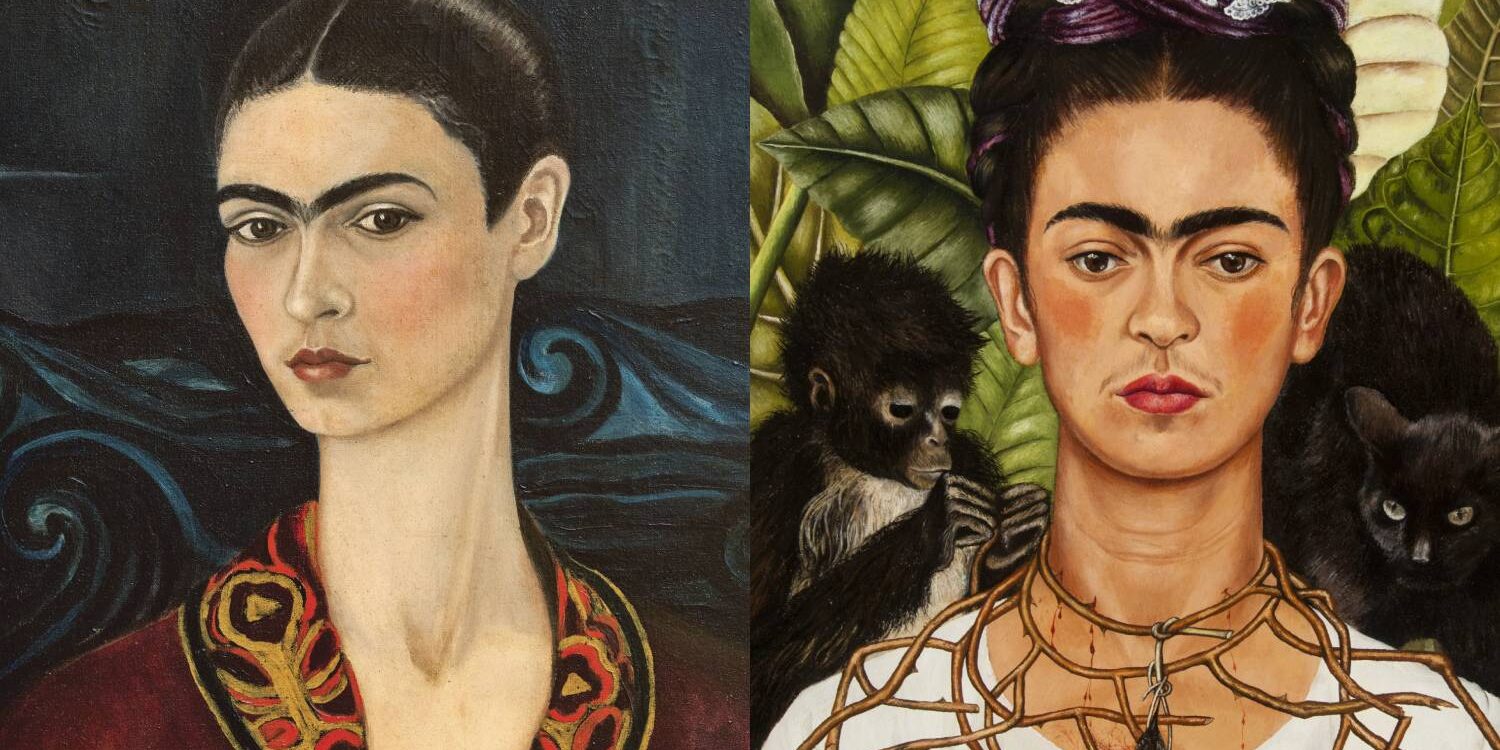
Frida Kahlo, the Mexican painter known for her unflinching self-portraits and exploration of identity, culture, and pain, has become a formidable icon in contemporary art and feminism. Her work not only reflects her tumultuous life but also resonates across generations, embodying themes of resilience and individuality.
Key details
Born in 1907, Kahlo’s life was marked by personal struggle and physical ailments, including polio and a severe bus accident that resulted in multiple surgeries. Her art often serves as a canvas for her innermost thoughts and feelings, depicting both her emotional and physical suffering. The five distinct portraits that showcase her evolution include “Self-Portrait with Thorn Necklace and Hummingbird” (1940); “The Two Fridas” (1939); “Self-Portrait with Crop” (1940); “Self-Portrait with Monkey” (1938); and “The Broken Column” (1944). Each painting expresses different facets of her identity and experience.
“Self-Portrait with Thorn Necklace and Hummingbird” presents Kahlo as vulnerable yet defiant, adorned with accessories symbolizing both beauty and pain. Similarly, “The Two Fridas” explores duality, portraying a dichotomy of her heritage and emotional state stemming from her tumultuous relationship with Diego Rivera. “Self-Portrait with Crop” showcases her response to societal beauty standards, while “Self-Portrait with Monkey” reflects her affinity with nature and creatures as companions. Lastly, “The Broken Column” lays bare her physical torment, serving as a powerful metaphor for resilience.
Why this matters
Kahlo’s rise to fame is significant not just as a testament to her artistic prowess but also as a cultural phenomenon. Her self-portraits act as a mirror to her internal struggles, empowering individuals, particularly women, to embrace their own complexities. In a world often characterized by societal pressures and rigid gender roles, Kahlo’s unapologetic self-expression resonates deeply, allowing viewers to connect with her on a personal level.
Moreover, the resurgence of interest in Kahlo’s work coincides with broader movements advocating for representation and diversity in the arts. As more scholars, curators, and artists seek to highlight marginalized voices, Kahlo’s impact underscores the necessity of authentic narrative in creating a more inclusive artistic canon. Her art continues to inspire modern feminists and intersectional movements, as they champion the need for diverse identities to be recognized in cultural dialogues.
Broader picture
The enduring legacy of Frida Kahlo extends beyond art into social discourse. As an icon of resilience, she represents the complexities of identity shaped by gender, ethnicity, and personal trauma. In recognizing her contributions, society acknowledges the importance of diverse narratives in both historical and contemporary contexts. Kahlo’s work invites ongoing exploration into how personal experiences can shape and redefine artistic expression.
Her influence can be seen in various realms, from fashion to literature, as contemporary artists and thinkers draw inspiration from her life story. As such, Frida Kahlo is not merely an icon of the past; she remains a vital figure in discussions surrounding art, identity, and the human condition in the present day.
Original Source: https://www.artsy.net/article/artsy-editorial-frida-kahlo-icon-5-portraits