

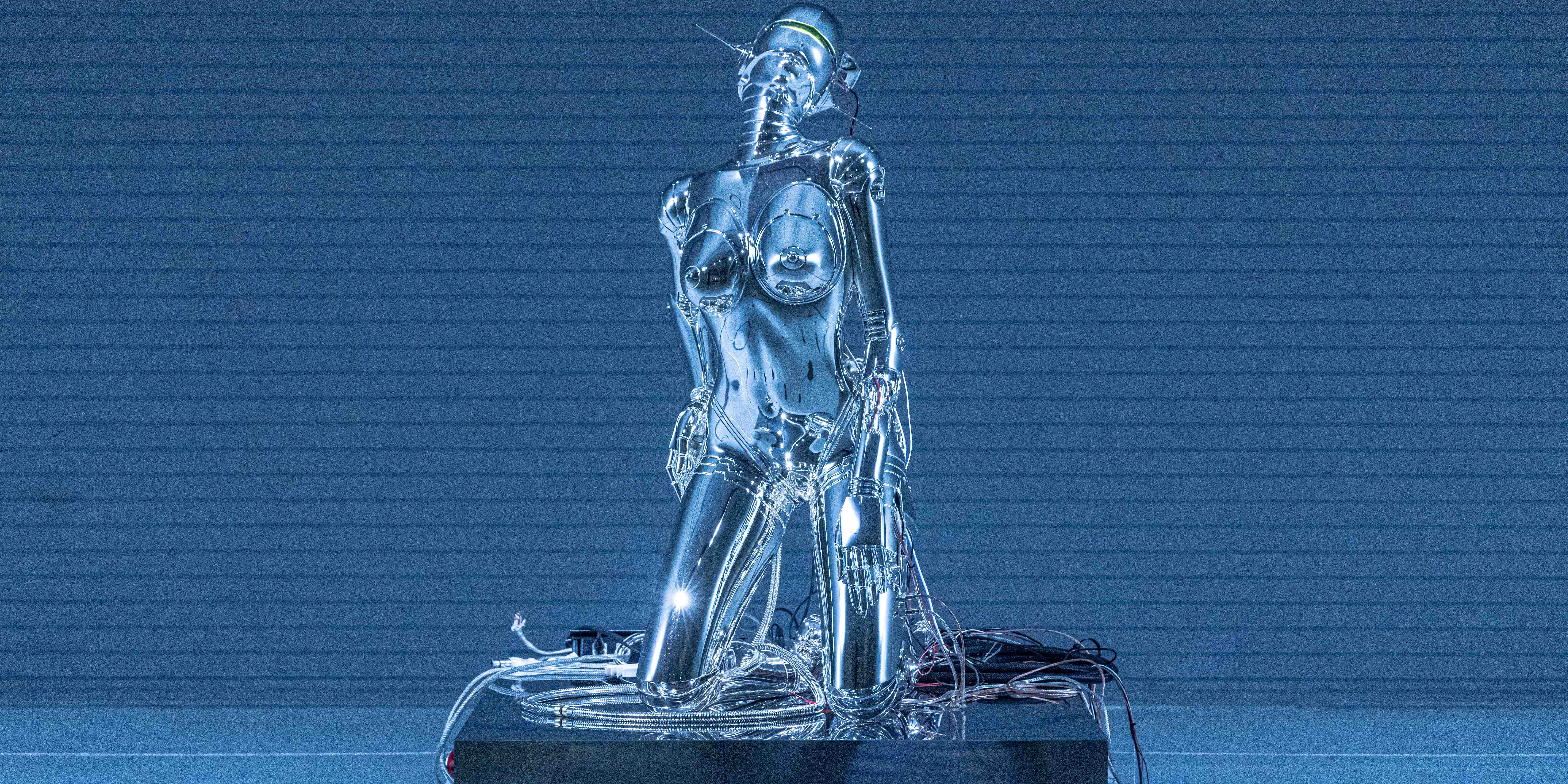
Hajime Sorayama’s sexy robots, the strikingly sensual depictions of feminine cyborgs that blur the line between man-made and natural, have long intrigued the world since their inception in the late 1970s. over four decades later, the allure of these alluring automatons is far from losing its luster, instead increasingly reflecting our evolving fantasies and societal trends.
Best recognized for his “gynoids” series, a fusion of ‘gyno,’ meaning woman, and ‘Android,’ Sorayama’s artwork is a provocative exploration of the evolving relationship between humans and technology. In these detailed airbrushed creations, realistically rendered female figures are transmuted into mechanical entities, each line and curve emphasizing an eroticized techno embodiment.
Recent online coverage showcases the resurgence of Sorayama’s artwork paying homage to the Japanese illustrator’s intricate work, and his profound influence felt across various industries – from Hollywood visual effects design to high fashion collaborations. Sorayama’s sexy robots are not only a unique representation of art but also highlight how the Japanese illustrator has helped shape modern-day obsessions with technology and AI.
This fascination started with the 1982 publication of Sorayama’s book, “Sexy Robot,” which featured hyperrealistic paintings of gynoids in provocative poses. This artwork played into the popular culture during a time when the world was grappling with the dawn of the digital age, unsure of what the increasing integration of technology could mean for human existence. This blend of sexuality and technology made Sorayama’s art both an icon and a subject of curiosity.
Today, Sorayama’s modern androgynes continue to stir the imagination, offering a unique lens to examine society’s evolving fantasies. The allure of Sorayama’s sexy robots reflects the human impulse to anthropomorphize machines, a natural tendency to attribute human characteristics to non-human entities. Additionally, it might also echo the dichotomy of dread and anticipation that often accompanies advances in artificial intelligence and robotics.
From a sociocultural perspective, the sexualized portrayal of these female gynoids could be seen as a reflection of societal attitudes towards femininity and gender roles. Sorayama’s ‘gynoids’ not only explore the idea of technology as a dominator but also signify a shift in the objectification of women.
Moreover, Sorayama’s metallic sirens serve as metaphors for our society’s techno fetishes and the constant search for perfection. Anthropologist Jennifer Robertson notes, “Sorayama’s fembots have no fear of aging, a ‘natural’ human process, which might be considered superfluous in the age of technology.”
The recent resurgence of Sorayama’s sexy robots, as reflected in contemporary pop culture, attests to the timeless attraction of his illustrated fantasies. Even in today’s society dominated by AI, the magnetism of these man-made mermaids remains strong, symbolizing both our deepest desires and our fascination with an increasingly tech-centric future.
Dior Men’s creative director, Kim Jones, collaborated with Sorayama for the brand’s pre-fall 2019 collection, reinforcing the artist’s increasing relevance in the digital age, and his impact on the world beyond the art realm. Similarly, the artist’s influence is seen in Hollywood, where his female robot designs have trickled into several iconic movies, including the “Terminator” and “Ex Machina.”
While there is ongoing debate over the implications of Sorayama’s sexy robots, the value of his artwork cannot be denied. The futuristic yet sensual aesthetics do more than catch the eye – they infiltrate our understanding of the evolving relationship between humans and machine, encapsulating both our fears and fantasies on canvas.
In essence, the continued popularity of Sorayama’s sexy robots is testament not only to his artistic vision but also to the age-old fascination with the confluence of technology and sexuality. As the world becomes more tech-driven, and fantasies evolve in tandem, Sorayama’s gynoids remain relevant, proving that fantasies, no matter how strange or erotic, always have place in our collective conscience.
Original Source: https://www.artsy.net/article/artsy-editorial-hajime-sorayamas-sexy-robots-reflect-fantasies