

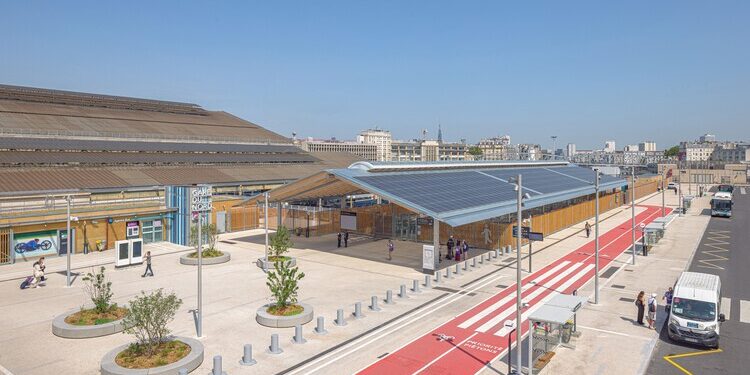
The newly inaugurated Solar Bicycle Hall at Paris-Nord Station represents a significant step forward in sustainable urban mobility. This innovative facility combines solar energy technology with bicycle infrastructure, aligning with emerging trends in eco-friendly transportation solutions. The development is a collaboration between AREP, the design and engineering subsidiary of the SNCF, and various municipal stakeholders dedicated to enhancing cycling as a viable travel option in urban environments.
Key details
Covering an area of approximately 1,500 square meters, the Solar Bicycle Hall is meticulously designed to accommodate around 300 bicycles, catering to both daily commuters and tourists. Its architecture boasts a contemporary aesthetic, harmonizing with the historic context of one of Europe’s busiest train stations. Notably, the facility is equipped with solar panels that harness renewable energy to power its lighting and essential systems, thereby reducing its carbon footprint.
The hall not only facilitates bicycle storage but also promotes an array of mobility services including repair stations and rental bike options. Managed by the SNCF, the facility aims to streamline the integration of cycling within the wider transport network, offering a seamless connection to train and bus services and thus encouraging multi-modal transport strategies.
Why this matters
The Solar Bicycle Hall is significant beyond its architectural innovation; it represents a fundamental shift in public transportation policy. As urban populations continue to rise, cities around the world are reevaluating traditional transport infrastructures that depend heavily on fossil fuels. In Paris, the integration of cycling into everyday commuting has become a focal point in the city’s sustainability agenda. The launch of the Solar Bicycle Hall signals a proactive approach to promoting cycling as a mainstream, environmentally friendly alternative.
Furthermore, the hall serves as a model for other urban centers looking to invest in sustainable transport options. By prioritizing accessible and secure bicycle parking, cities can encourage more residents and visitors to consider cycling as a viable method of transportation. This approach not only eases congestion on public transport and roads but also contributes to reduced air pollution and greenhouse gas emissions.
Broader picture
The establishment of the Solar Bicycle Hall at Paris-Nord Station is part of a larger movement towards sustainable urban infrastructure that aims to make cycling not just a leisure activity but a practical commuting choice. Projects like this are essential in fostering a culture of sustainability, which requires collaboration among public transportation authorities, local governments, and community stakeholders.
As cities globally grapple with climate change and urbanization challenges, the success of facilities like the Solar Bicycle Hall could influence transportation policies far beyond Paris. By framing cycling not merely as a secondary option but as an integral element of urban mobility, stakeholders can pave the way for a more comprehensive approach to sustainable transport solutions. Ultimately, this initiative speaks to a broader commitment to not only meeting immediate transportation needs but also addressing long-term environmental goals.
Original Source: https://www.archdaily.com/1186356/solar-bicycle-hall-paris-nord-station-arep