

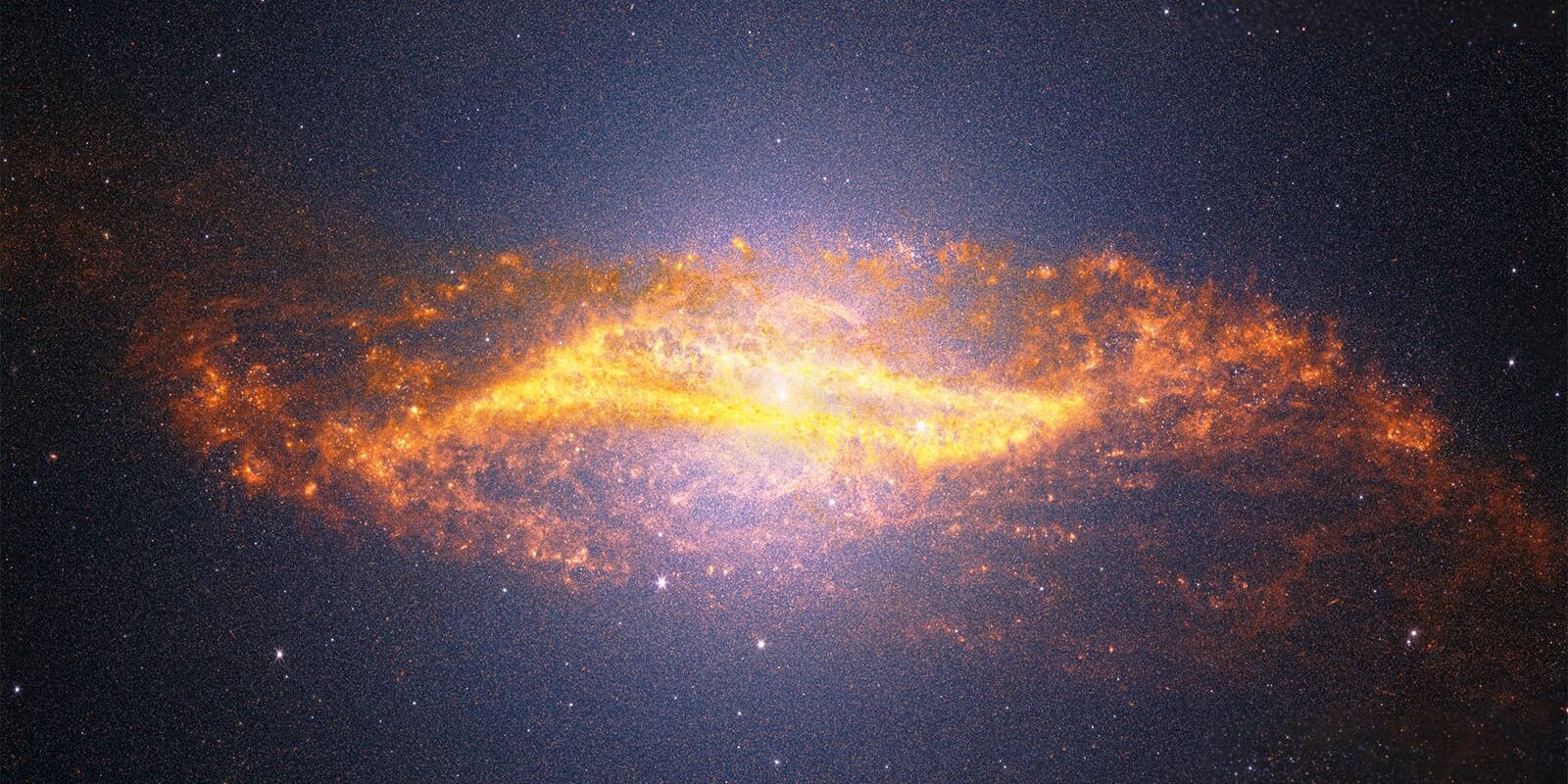
The James Webb Space Telescope (JWST) is entering its fourth year of operation, showcasing significant advancements in its imaging capabilities that promise to reshape our understanding of the universe. This milestone reflects not only the successful deployment of cutting-edge technologies but also highlights the unprecedented clarity and detail Webb’s instruments can provide.
Key details
Since its launch in December 2021, JWST has been pioneering new frontiers in astronomy with its suite of highly sophisticated cameras. This year, scientists demonstrated improved capabilities of Webb’s Near Infrared Camera (NIRCam) and Mid-Infrared Instrument (MIRI). These instruments have played a critical role in capturing astonishing images of astronomical phenomena, including details of distant galaxies and the formation of stars in unprecedented clarity.
Recent releases include images that reveal the intricate structures of planetary nebulae and the atmospheres of exoplanets, showcasing the combination of high sensitivity and precision in Webb’s imaging tools. The telescope has also been instrumental in gathering data that helps astronomers reconstruct the conditions of the early universe, giving context to cosmic evolution.
Why this matters
The upgrades in Webb’s imaging technology are crucial for a number of reasons. Firstly, they enable researchers to study celestial bodies in greater detail than ever before, significantly enhancing our understanding of their compositions, behaviors, and histories. These insights can yield valuable information about star and planet formation processes and the conditions that may support life beyond Earth.
Moreover, the ability to observe in both near and mid-infrared spectra allows for the analysis of cooler objects and dust-obscured regions of space, areas that were often inaccessible to previous telescopes. This expanded observational capacity could lead to groundbreaking discoveries, such as more accurately estimating the number of exoplanets that reside in habitable zones of their stars.
Broader picture
The advancements in the James Webb Space Telescope’s imaging capabilities come at a crucial time in the realm of astronomy. With other telescopes, such as Hubble, being limited in their observational range, Webb fills a significant gap in space exploration. Its technology not only complements existing efforts but leads the charge for future missions aimed at deepening our cosmic knowledge.
As Webb continues to collect and relay its findings, the scientific community stands poised to rethink established theories and question previous assumptions about the universe’s structure and origins. The combination of innovative technology and relentless inquiry fosters an environment ripe for discovery. In turn, the implications of Webb’s explorations may resonate not only within scientific circles but also across broader public understanding, further igniting interest in space and science.
In summary, as the James Webb Space Telescope deepens our cosmic perspective through its sophisticated imaging capabilities, it represents not just a powerful technological triumph but also a gateway to future discoveries that could fundamentally alter humanity’s comprehension of the universe.
Original Source: https://petapixel.com/2026/07/06/webb-celebrates-fourth-year-of-science-by-showing-off-its-cutting-edge-cameras/