
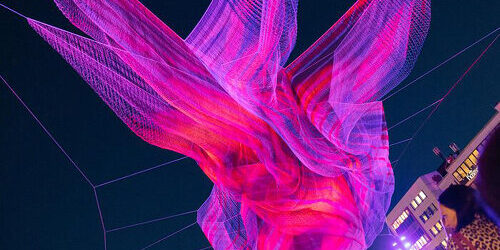
In a stunning display of artistic innovation, renowned artist Janet Echelman has unveiled her latest installation, “1.8,” in Frankfurt, Germany, a striking piece that drapes the city’s skyline with vibrant, undulating nets that oscillate gracefully in the wind. This monumental work not only adds tangible beauty to the urban landscape but also serves as a poignant reflection on resilience and hope in the face of global challenges.
What happened
The installation was officially launched during a ceremony attended by city officials and art enthusiasts, marking a significant addition to Frankfurt’s public art scene. Echelman’s creation is made from lightweight, durable materials that respond uniquely to the natural elements, making the installation a living piece of art that shifts and transforms with the wind. The project has gone through various phases of development over the past years, culminating in this eye-catching installation that spans a considerable area above the bustling city, designed to be both an artwork and a community gathering point.
Echelman, who has gained international acclaim for her large-scale public art, stated that “nature becomes the choreographer” of her work, emphasizing the dynamic relationship between art and the environment. The installation aims to inspire viewers by symbolizing hope and renewal, especially crucial during these uncertain times marked by social upheaval and environmental crises. The welcome continuation of outdoor public art projects post-pandemic serves to enhance community spirit and draw visitors back to urban spaces.
Why it matters
The significance of Echelman’s work extends beyond its aesthetic appeal. “1.8” engages with pressing issues such as climate change and the potential for sustainable living. Each weave in her nets symbolizes interconnectedness, serving as a reminder of the community’s role in nurturing the environment. As public spaces evolve post-pandemic, installments like this act as catalysts for discussion, encouraging people to consider their relationship with nature and one another in a rapidly changing world.
Public art plays a crucial role in revitalizing urban areas, fostering social connections, and inviting diverse interpretations. Echelman’s work invites spectators not just to gaze at a captivating structure, but to participate in a dialogue surrounding hope and resilience, prompting mindfulness about our environment and the future.
What comes next
Looking ahead, the immediate outlook for “1.8” includes a series of community engagement events aimed at fostering interactions between the public and the art. Echelman and local organizers plan workshops, educational tours, and talks that will delve into the installation’s themes. As the seasons change, the nets will continue to evolve, creating a mirrored experience of both nature and the city’s rhythm.
As Frankfurt embraces this transformative piece of art, it sets a precedent for other cities grappling with how to integrate art into public spaces meaningfully. With Echelman’s work now a centerpiece of the city, it stands to remind residents and visitors alike of the enduring power of art to inspire, connect, and provoke thought in challenging times.
Original Source: https://www.designboom.com/art/nature-choreographer-janet-echelman-sky-full-hope-earthtime-frankfurt-wdc/